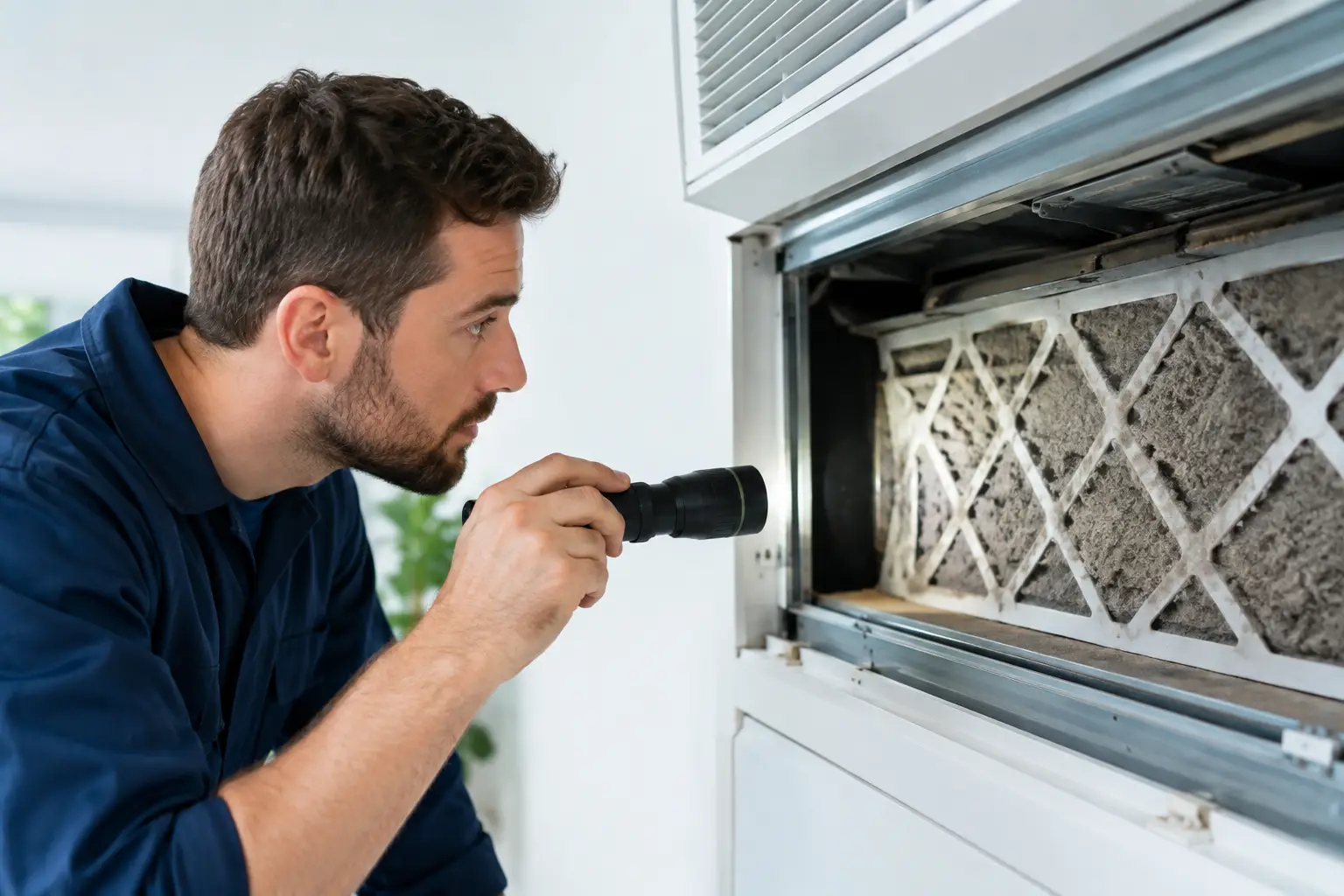
A clean-looking room can still be supplied by a dirty HVAC system. In Puerto Peñasco, windblown dust, coastal humidity, long vacancy periods, remodeling debris, and pest activity can build up where you cannot see it: inside supply ducts, return ducts, registers, and equipment components. Recognizing HVAC contamination signs early can protect your air quality, comfort, and expensive air-conditioning equipment before a small hidden problem becomes a larger cleanup or repair.
1. Dust Blows Out After Cleaning
If you wipe down furniture, run the air conditioner, and see a fresh layer of dust shortly afterward, the source may be more than your floors or open windows. Ductwork can hold accumulated dust, drywall residue, insulation fragments, construction debris, and other material that gets disturbed when air moves through the system.
A dusty register by itself does not prove the entire system is contaminated. Registers collect everyday household dust. The concern rises when dust returns quickly, comes from multiple vents, appears in streaks around the grille, or is accompanied by reduced airflow and an odor.
Changing a clogged filter is the first practical step. If the issue continues with a properly fitted filter, a camera inspection can show whether material is sitting deeper in the ducts or whether there is a damaged section allowing dust to enter.
2. Musty, Sour, or Foul Odors When the AC Starts
Your nose often notices a problem before you can see it. A musty smell when the AC first turns on can point to moisture, organic buildup, mold growth, or contamination in the duct system. A sour, stale, or dirty-sock smell can also come from components near the air handler or evaporator area.
Do not cover the odor with air freshener and assume it is handled. Fragrance only masks the warning. The right next step is to identify where the odor begins. Is it strongest at one vent, throughout the home, or only when the system cycles? That information helps separate a duct issue from a drain, equipment, plumbing, or room-specific source.
In a vacation home or condo that sits closed up for weeks or months, humidity and stagnant air can make odor problems more noticeable when you return. A visual inspection helps determine whether cleaning, moisture correction, or a repair professional is needed.
3. Visible Dark Spots or Debris Around Vents
Dark spotting around a register, black material inside a vent opening, or debris clinging to the grille deserves attention. It may be ordinary dust mixed with moisture, but it can also indicate mold-related growth or contamination that needs a closer look. Color alone is not a diagnosis. What matters is the pattern, the moisture conditions, the odor, and what is found inside the system.
Remove the register cover only if it is safe and accessible, then look without pushing tools, sprays, or household vacuums far into the duct. Aggressive DIY cleaning can loosen debris without removing it, damage flexible ductwork, or hide the condition that needs to be documented.
A camera-led inspection provides a clear record of what is actually present. Property owners who live out of state especially benefit from photos or video instead of a vague statement that the ducts are "dirty."
4. Airflow Has Dropped in One or More Rooms
Weak airflow is not always contamination. It can result from a failing blower, a closed damper, a damaged duct, a loose connection, or an undersized system. But when restricted airflow appears along with dust, odors, or visible buildup, contamination inside the ductwork becomes a reasonable concern.
Pay attention to rooms that suddenly feel warmer, take longer to cool, or receive much less air than nearby rooms. A blocked or collapsed duct can force the equipment to work harder while leaving part of the home uncomfortable. In Puerto Peñasco heat, that extra strain matters.
An inspection should look for both dirt and mechanical damage. Cleaning a duct will not fix a crushed, disconnected, or torn section. Likewise, repairing a duct without removing the contamination it holds may leave the air-quality problem behind.
5. You Find Pest Evidence Near Returns or Registers
Insects, rodents, nesting material, droppings, or dead pests near vents are not a cosmetic issue. Returns can pull surrounding air and loose material toward the HVAC system, while damaged or open duct connections can create access points. Pest contamination may introduce odors, bacteria, allergens, and debris into areas that distribute air through the home.
The pest source needs to be addressed before or alongside duct cleaning. Otherwise, the same contamination can return. If a camera inspection finds damage in an inaccessible area, the goal is to identify the location precisely so the appropriate contractor can open, repair, seal, and restore that section with as little unnecessary demolition as possible.
6. Symptoms Improve When You Leave the House
Sneezing, coughing, irritated eyes, headaches, or worsening allergy symptoms can have many causes, including outdoor pollen, pets, cleaning products, humidity, and existing medical conditions. They do not automatically mean the HVAC system is contaminated.
Still, a pattern is worth taking seriously. If symptoms become more noticeable when the AC runs, in a particular room, or after returning to a closed vacation property, inspect the home rather than guessing. People with asthma, allergies, young children, or older family members may be more sensitive to airborne particles and odors.
Think of this as a home-maintenance clue, not a medical diagnosis. A thorough inspection can determine whether visible debris, moisture conditions, pest evidence, or duct damage may be contributing to the indoor environment.
7. The Home Was Recently Remodeled or Purchased
Post-remodeling dust does not stay only on countertops. Drywall dust, sawdust, insulation pieces, and loose construction debris can enter open registers and returns while work is underway. Even careful contractors cannot always prevent every particle from finding its way into the system.
A newly purchased home can have the same unknowns. You may not know how often filters were changed, whether a past leak affected the ducts, whether pets or pests were present, or whether prior owners covered odors rather than correcting their cause. A camera inspection gives you a condition report before you commit to unnecessary cleaning or overlook a problem that needs repair.
This is particularly useful for second-home owners arriving from Arizona, California, Texas, or elsewhere. A property can look spotless after a turnover cleaning while the HVAC system tells a different story.
8. Filters Get Dirty Far Too Fast
Filters are supposed to collect particles, so some discoloration is normal. But a filter that becomes heavily loaded much faster than expected can indicate excessive dust in the home, construction residue, return-air leaks, or a system running longer than it should.
Check that the filter is the correct size and installed in the right direction. A poorly fitted filter can allow air to bypass it, carrying dust deeper into the equipment. Do not install an overly restrictive filter simply because it sounds better. Some systems cannot handle high-resistance filters well, and restricted airflow can create other performance problems.
Follow the equipment manufacturer's recommendations and check filters more often during dusty seasons, after renovations, or when the property has been vacant. If frequent filter changes do not solve the buildup, inspect what is happening beyond the filter slot.
9. You See Damage, Rust, or Moisture Near the System
Water staining, rust, condensation, wet insulation, or a damaged duct connection should never be ignored. Moisture is the condition that turns ordinary dust into a more serious contamination concern. It can support mold-related growth, cause odors, degrade duct materials, and damage nearby building finishes.
The priority is to correct the moisture source. Depending on the system, that may involve drainage, insulation, air leaks, equipment operation, or a building issue. Cleaning without fixing moisture is temporary at best. The contamination may return because the cause was left in place.
What a Proper HVAC Inspection Should Give You
You should not have to approve a major cleaning project based on a guess. A useful inspection identifies what can be seen, where it is located, and what action fits the finding. That may mean targeted cleaning of vents and ductwork, removal of construction debris, mold-focused cleaning, odor remediation, repair of damaged sections, or simply better filter maintenance.
At Clean It 4U Mexico, camera-based inspection is used to show hidden conditions before work begins. HEPA-filtered equipment is then used to remove collected material rather than merely pushing it farther through the system. When direct access is not possible, precise findings can help the right repair professional address the damaged area.
If your home has an odor that returns, dust that will not stay gone, visible debris, pest evidence, or rooms with weak airflow, do not wait for the next visit to see if it disappears. Schedule an inspection while the signs are present, get visual proof of the condition, and make the next repair or cleaning decision with clear information.