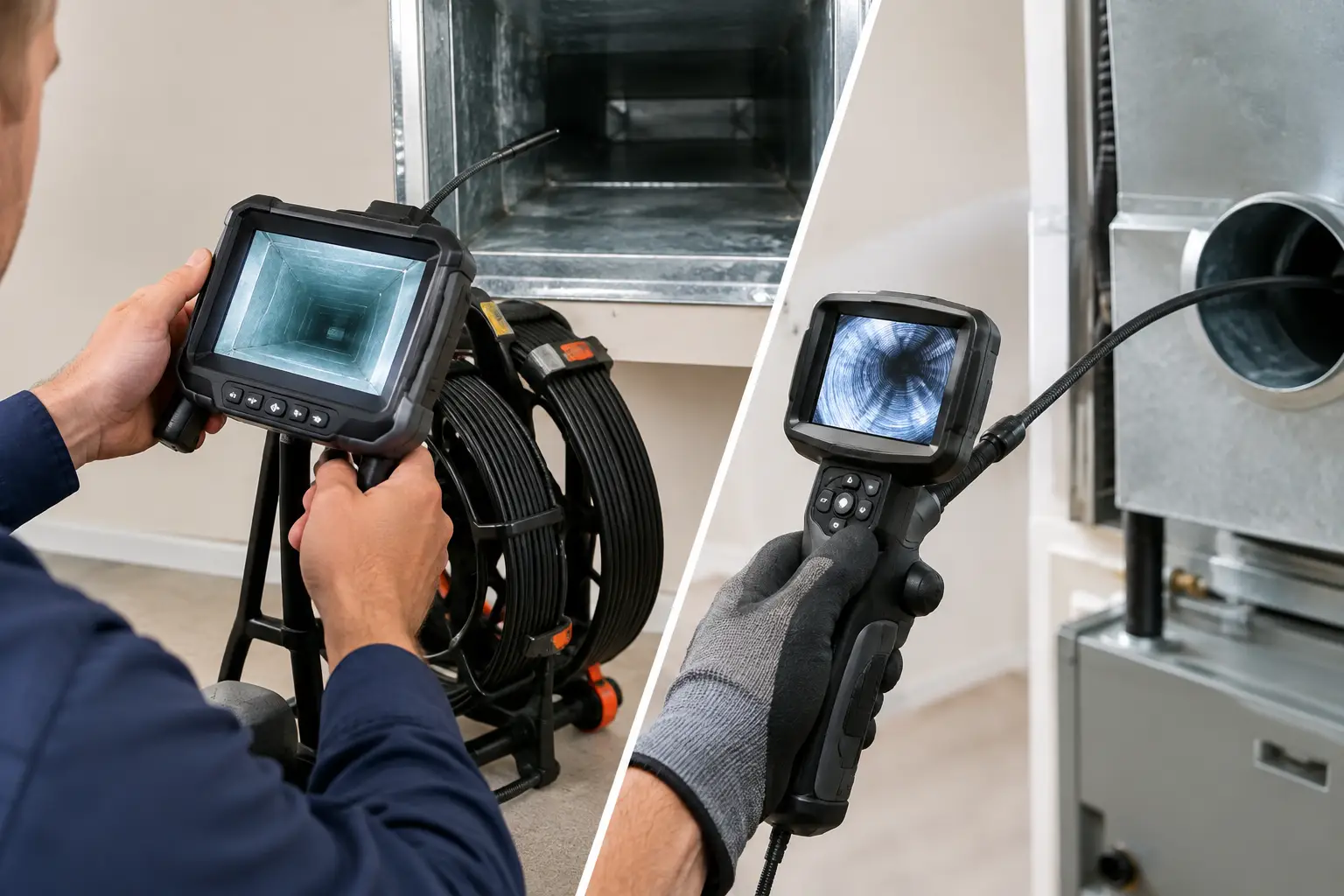
A dirty register can tell you that dust is moving through the system. A musty odor can tell you something is wrong. Neither tells you what is actually inside the duct run behind the wall, under the slab, or above the ceiling. That is where the duct camera versus borescope question matters. Both tools can provide visual evidence, but they are built for different access conditions and different levels of detail.
For a homeowner or condo owner in Puerto Peñasco, the right inspection method can prevent wasted cleaning, missed damage, and vague answers. Coastal humidity, windblown dust, remodeling debris, pests, and long periods when a second home sits closed up can all create problems that are not visible from the register. The goal is not simply to put a camera into a duct. The goal is to see enough to identify the problem and determine the correct next step.
Duct Camera Versus Borescope: The Basic Difference
A duct camera is designed to travel through longer sections of residential ductwork. It typically uses a flexible push cable, a lighted camera head, and a monitor that allows the technician and property owner to view the interior of the system. Depending on the equipment and duct layout, it can inspect runs well beyond the opening at a register or return grille.
A borescope is generally a smaller inspection camera with a narrow, flexible probe. It is made for getting through very tight openings, looking behind components, or checking a confined area where a larger camera cannot fit. Think of it as a close-range diagnostic tool. It is useful for inspecting a small hole in drywall, the inside of a cabinet chase, a tight mechanical compartment, or a short inaccessible section near an HVAC component.
Both tools use a camera and light. The difference is reach, maneuverability, image stability, and the type of information they can gather. A borescope may answer, “Is there visible damage right here?” A duct camera is more likely to answer, “How far does this contamination extend, and what condition is the duct in farther down the line?”
When a Duct Camera Is the Better Choice
A full duct camera inspection is usually the better starting point when there is a concern inside an operating HVAC system. This includes homes with visible dust blowing from vents, weak airflow in one room, persistent foul odors, suspected mold, pest debris, or construction residue after a remodel.
The length of the camera cable matters. Dust and debris do not always collect near the register. In many systems, heavy buildup settles at turns, low points, connection joints, and areas where airflow has been restricted. A camera that can move farther into the duct provides a more useful picture of the actual condition.
A duct camera also helps separate cleaning issues from repair issues. For example, a technician may find loose insulation, collapsed flex duct, a disconnected joint, standing moisture, or a torn section of duct lining. Cleaning alone will not correct those problems. Finding them before work begins protects the homeowner from paying for a service that cannot solve the underlying issue.
For owners who manage a vacation property from Arizona, California, Texas, or farther away, visual documentation is especially valuable. Photos or recorded findings make it easier to understand what is in the system without relying on a vague statement that the ducts are “dirty.” You can see whether the issue is ordinary dust, construction debris, dark staining that needs further attention, pest contamination, or physical damage requiring a repair professional.
Where a Borescope Earns Its Place
A borescope is not a lesser tool. It is simply more specialized. It can be the best option when the suspected problem is in a very limited, difficult-to-reach location.
For instance, a small borescope may be used to inspect around an evaporator coil area, behind a wall penetration, inside a narrow return cavity, or near a damaged duct connection that cannot be reached through an existing vent opening. Its small diameter can allow inspection through a carefully placed access point with minimal disturbance to finished surfaces.
This matters when there is a strong odor or moisture concern in one specific area, but no clear path for a larger duct camera. A borescope can help confirm whether there is wet insulation, biological growth, debris, or a separation near the suspected location. It may also help a contractor understand where to open a wall or ceiling if repair access is needed.
The trade-off is that a borescope has limited reach and can be harder to steer through long, turning duct runs. The image may show a small area very clearly while failing to reveal conditions farther away. It is excellent for confirmation at a point of concern, but it is not always enough for a whole-system inspection.
What Each Tool Can Miss
No inspection camera can see through heavy debris, standing water, severe duct collapse, or a blocked pathway. A camera also cannot confirm every health concern by appearance alone. Dark material inside a duct may be dust, staining, residue, or suspected mold growth. If there is a serious mold concern, the visible condition, moisture source, and the scope of contamination all need to be considered before deciding on cleaning or remediation.
A borescope can miss a problem because it never reaches it. A duct camera can miss a problem because a sharp turn, restricted section, or delicate flex duct prevents safe advancement. In older homes, condos, or remodeled properties, duct paths are often less straightforward than owners expect.
That is why an inspection should not rely on one view from one register. A good assessment checks multiple supply and return points, considers airflow symptoms, looks at accessible equipment areas, and records what can actually be verified. If direct access is not possible, the most useful result may be precise identification of the suspected damage location so a repair contractor can access it correctly.
Choosing the Right Tool for Common Problems
If the concern is widespread dust, debris after construction, dirty vents, or reduced airflow throughout the home, a duct camera is generally the stronger choice. It provides the broader view needed to decide whether the system needs targeted cleaning and where the worst accumulation is located.
If the concern is a tight area near a connection, an inaccessible wall cavity, or a small opening around HVAC equipment, a borescope may be the right first tool. It can inspect without unnecessary demolition and help narrow down a repair path.
For foul odors or suspected contamination, the answer may be both. A duct camera can examine the larger runs while a borescope checks the confined areas around the air handler, return cavity, drain components, or a suspected damaged joint. The right approach depends on where the evidence points, not on which camera looks more impressive.
Why Inspection Should Come Before Cleaning
Cleaning without inspection is guesswork. If a duct contains ordinary dust, cleaning may improve indoor cleanliness and keep debris from circulating through the home. If it contains drywall dust, sawdust, insulation, pest waste, moisture damage, or a disconnected run, the work plan needs to change.
Camera findings also help protect HVAC equipment. Restricted ducts, excessive debris, and damaged connections can make an air-conditioning system work harder. In Puerto Peñasco's heat, that extra strain is not a minor inconvenience. It can affect comfort, energy use, and the lifespan of equipment that is expensive to repair or replace.
At Clean It 4U Mexico, camera-led inspection is used to show homeowners what can be verified before cleaning or recommending a repair path. The purpose is practical: identify the condition, remove contaminants when cleaning is appropriate, and avoid promising that cleaning will fix damage it cannot reach.
If your home has odors that return, dust that quickly reappears, unexplained weak airflow, evidence of pests, or concerns after a renovation or property purchase, schedule an inspection before assuming the ducts only need a quick vacuum. A clear view inside the system gives you a better place to start, and a more honest answer about what your home needs.