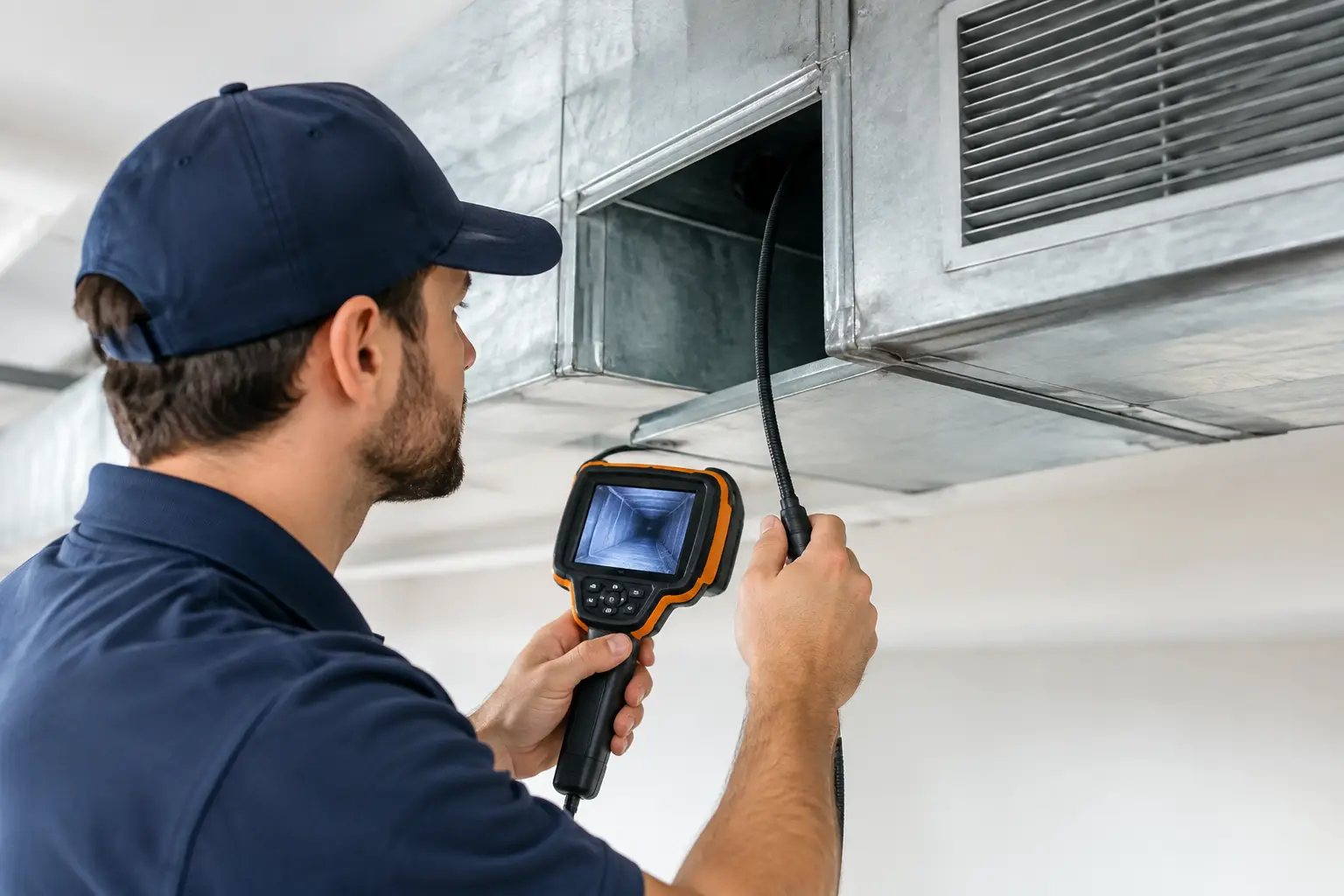
The register looks clean, but every time the AC starts, a musty smell moves through the room. Or one bedroom never cools properly while the rest of the home feels fine. Those are not problems you can solve by wiping a vent cover. HVAC duct diagnostics look inside the concealed parts of the system, where dust, construction debris, moisture damage, disconnected duct runs, and contamination can sit for years.
For homeowners and condo owners in Puerto Peñasco, this matters. Coastal humidity, windblown dust, long periods with a vacation property closed up, and heavy AC use can expose problems that are not visible from the living space. A proper inspection replaces guesswork with camera evidence and a clear next step.
What HVAC Duct Diagnostics Actually Check
Duct diagnostics are an inspection process, not simply a cleaning recommendation. The goal is to see the condition of the supply ducts, return ducts, registers, accessible connections, and areas around the air handler. A camera placed inside the ductwork can document what is actually there rather than relying on an odor, a dirty grille, or assumptions based on the age of the home.
A complete inspection may reveal accumulated dust, drywall residue from remodeling, loose insulation, pest debris, standing moisture marks, visible microbial-looking growth, crushed flexible duct, disconnected sections, or tears that allow conditioned air to escape into an attic or wall cavity. It can also show when duct interiors are in reasonable condition and cleaning is not the immediate priority.
That last point is important. Not every system needs the same service. If the ductwork is clean but airflow is weak, the issue may be a filter, blower, thermostat setting, refrigerant-related AC problem, or a closed damper. Diagnostics help keep the repair focused on the actual source.
Signs You Should Inspect the Ductwork
A sudden dust problem after construction is an obvious reason to inspect, but many duct issues begin quietly. You may notice fine dust returning to furniture soon after cleaning, uneven temperatures between rooms, weak air at one or more registers, a persistent stale or foul smell, or dark buildup around vent openings.
Property owners should also consider an inspection after purchasing a home or condo, completing a remodel, discovering evidence of pests, or reopening a residence that has been closed for months. A filter can catch some airborne particles, but it will not remove debris that was left inside ducts during construction or contamination already attached to interior duct surfaces.
Odors deserve attention, especially when they appear only while the system runs. A smell can come from duct contamination, but it can also originate at the evaporator coil, drain pan, return cavity, insulation, or a plumbing-related source near the air handler. Camera inspection narrows the possibilities before anyone starts cleaning or replacing components.
Visible Dust Is Not the Whole Story
A dusty register does not prove the duct system is heavily contaminated. Register covers are exposed to room air and can collect surface dust quickly. On the other hand, a clean-looking register does not prove the duct behind it is clean.
This is why visual documentation matters. Camera footage can show whether dust is light and settled, whether there is heavier buildup restricting the duct, or whether material inside the system calls for cleaning, repair, or a contractor who can access a hidden section. Owners who live out of state can receive a more useful explanation when findings are supported by images rather than a vague statement that the ducts are dirty.
Why Hidden Duct Problems Affect Comfort and Equipment
Your AC system is designed to move a specific volume of air through a controlled path. When that path is blocked, torn, disconnected, or contaminated, comfort and equipment performance can suffer.
A duct leak in an attic, ceiling void, or wall can waste cooled air before it reaches the room. In Puerto Peñasco heat, that can mean longer run times, hot spots, and more strain on equipment that is already working hard. A disconnected duct can create a dramatic airflow problem in one room while sending expensive conditioned air into an unconditioned space.
Heavy debris also affects the system differently depending on where it is located. Material in a return duct may be drawn toward the air handler and filter. Debris in supply ducts can continue blowing into occupied rooms. Dust around a blower compartment, coil, or drain area can contribute to reduced efficiency and moisture-related conditions. The remedy depends on the location and the condition of the materials, not on a one-size-fits-all cleaning pitch.
Moisture and Suspected Mold Require Careful Handling
When people see dark material in or near a vent, they often call it black mold. Color alone cannot identify mold or determine whether a material is hazardous. But visible growth, water staining, a persistent musty odor, or recurring moisture around HVAC components should never be ignored.
The first job is to locate the moisture source. Cleaning a contaminated surface without addressing a leaking duct, condensation issue, drain problem, or humidity condition can allow the problem to return. Depending on what is found, the proper path may include targeted cleaning, removal of damaged insulation or duct material, drain correction, HVAC repair, or mold testing by an appropriate specialist.
A professional should explain what can be seen, what cannot be confirmed visually, and what work is needed next. That is a far better approach than making promises based on a quick look through a register.
The Inspection-First Process
An inspection-first service begins with the symptoms you have noticed: odors, dust, poor airflow, a recent renovation, water events, or pest activity. The technician then checks accessible registers, returns, equipment areas, filters, and visible duct connections before using a camera to inspect deeper into the runs.
Footage and photos are useful because they create a record of conditions inside areas you cannot normally reach. If cleaning is needed, the work can be targeted to the affected sections rather than treating every concern as identical. If a duct is torn or inaccessible, the inspection can identify its likely location and help direct the HVAC or repair professional who will open the necessary area.
At Clean It 4U Mexico, camera-based inspection is used to show owners what is inside their ductwork before recommending a cleaning or repair path. When removal is appropriate, HEPA-filtered equipment helps capture loosened dust and debris rather than simply moving it around the home.
What You Can Do Between Inspections
Good maintenance will not fix a disconnected duct or remove construction waste already trapped inside the system, but it can reduce preventable buildup. Use the filter size and type recommended for your equipment, and change it on schedule. In a dusty coastal property, during remodeling, or when the home is occupied full-time, filters may need attention more often than the standard interval.
Keep supply registers and return grilles clear of furniture and stored items. Watch for water near the indoor unit, rust around drain components, new ceiling stains, or insulation that looks wet near accessible duct runs. If the system begins making new noises, develops an odor, or loses airflow in a room, document when it happens and whether it occurs in cooling, heating, or fan-only operation.
Avoid spraying fragrance products, disinfectants, or homemade treatments into ducts. These products can mask the odor while leaving the source untouched, and some can leave residues on HVAC components. The better solution is to identify the material or mechanical problem first.
When Cleaning, Repair, or Both Is the Right Answer
Cleaning makes sense when inspection confirms removable dust, debris, pest-related contamination, or residue from a remodel. Repair is the priority when a duct is collapsed, disconnected, leaking, wet, or physically damaged. In some homes, both are necessary: debris must be removed, then the damaged duct section needs correction so airflow and cleanliness can be maintained.
For a second home, the timing can matter as much as the service itself. An inspection before arrival season, after a renovation, or during a property purchase can prevent an unpleasant surprise when the AC is needed most. You do not need to assume the worst, but you should not keep guessing about air that travels through hidden ductwork every day.
If your home has persistent odors, unexplained dust, weak airflow, or suspected contamination, schedule an inspection that gives you visible findings and practical options. A camera view inside the duct may be the simplest way to protect the comfort, air quality, and AC equipment you depend on.