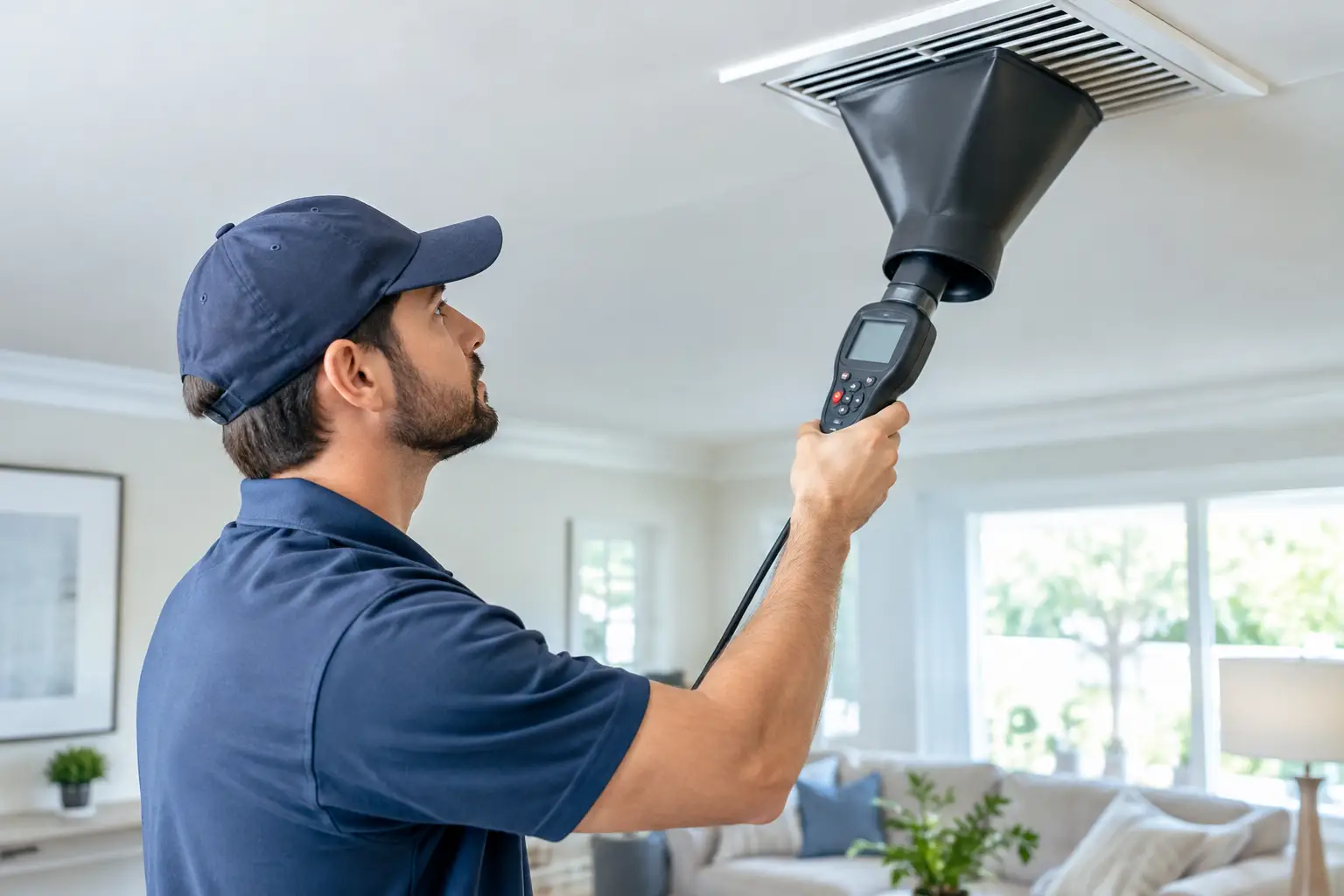
A bedroom that never cools, a register that barely moves a tissue, or a sour smell when the AC starts are not small annoyances in a Puerto Peñasco home. They can point to problems hidden behind ceilings, walls, and grilles. Home airflow testing helps identify where conditioned air is being lost, restricted, or contaminated before a comfort issue turns into equipment damage or a larger ductwork repair.
For second-home owners, the problem is often discovered after arriving for a weekend or opening a property that has been closed for months. The AC may run for hours, yet one room stays warm, dust blows from a vent, or the system seems louder than it used to be. Testing provides a starting point based on what the system is actually delivering, not guesswork from a thermostat setting.
What home airflow testing checks
Airflow is the volume of air moving through an HVAC system and into each room. A working system needs the right balance: enough air must leave through supply vents, and enough air must return to the system to be cooled again. When that balance is disrupted, the AC works harder while comfort drops.
A basic assessment begins at the registers. The inspector checks whether air is moving consistently, whether certain rooms receive substantially less air than others, and whether return grilles are pulling air back as they should. Temperature differences, visible dust patterns, noisy vents, and weak output can all provide useful clues.
The duct path matters just as much as the vent opening. A register may look clean on the outside while the duct behind it contains construction debris, heavy dust, insulation fragments, disconnected sections, moisture-related growth, or pest contamination. Camera-based inspection is often the practical next step because it shows what is actually inside concealed ductwork.
Airflow testing is not a single magic number. A low reading at one vent can result from a closed damper, a blocked grille, undersized ductwork, a dirty filter, a damaged flex duct, or a problem at the air handler. The value of testing is in tracing the symptom back to the most likely cause.
Signs your home needs airflow testing
Some airflow problems are obvious. Others show up as gradual changes that owners dismiss until the AC struggles during the hottest part of the year. Schedule an inspection when you notice several of these conditions:
- One or more rooms stay warmer or cooler than the rest of the home.
- Airflow is weak at vents that previously worked normally.
- Dust collects quickly near supply registers or blows into rooms when the system starts.
- The AC runs longer, cycles repeatedly, or cannot reach the thermostat setting.
- Musty, stale, burning, or foul odors appear when the system operates.
- A recently remodeled home has drywall dust, sawdust, or other debris entering the HVAC system.
- You see staining, dark buildup, insect debris, or signs of rodents near vents or returns.
A filter check should come first because a loaded filter can restrict airflow throughout the system. But replacing the filter does not solve a crushed duct, an open duct joint, a dirty blower area, or contamination farther down the line. If the same complaint remains after routine filter maintenance, it is time to look deeper.
Why weak airflow can damage more than comfort
Air conditioning equipment depends on correct airflow to move heat properly. When airflow is restricted, the system may run longer and place additional strain on components. In coastal conditions, where dust, humidity, wind, and long cooling seasons are part of property ownership, that extra strain can shorten the useful life of expensive equipment.
Poor airflow can also create uneven humidity. A closed-up condo may feel clammy even when the thermostat reads a reasonable temperature. Moisture, dust, and organic debris inside a system can create conditions that support microbial growth and persistent odors. Not every dark mark is black mold, and no responsible inspector should claim otherwise without proper evaluation. Still, visible buildup, moisture evidence, and foul odors should be treated as reasons to inspect and remove the source where possible.
There is also a cleanliness issue. Ducts do not create dust on their own, but they can collect and redistribute dust, renovation debris, insect remains, and other contaminants when material has entered the system. This is especially relevant after construction, remodeling, long vacancies, or pest activity.
What a proper airflow investigation looks like
A useful service visit should not begin with a promise to clean every duct before anyone has seen the problem. The first job is to document the condition of the system and identify where the restriction or contamination may be located.
The process usually starts with the homeowner's observations. Which rooms are uncomfortable? When did the odor begin? Has the property been renovated, vacant, or exposed to a roof leak or pest issue? These details help narrow the inspection.
Next comes a visual check of registers, returns, filters, accessible equipment areas, and visible duct connections. An inspector may find simple causes such as blocked return grilles, dirty vents, damaged register boots, or obvious debris. Where access allows, a camera inspection can show conditions inside duct runs that cannot be evaluated from the room alone.
Visual proof matters. Photos or video of debris, damaged duct sections, gaps, or contamination give the owner a clear basis for deciding what to do next. This is particularly useful for out-of-state owners who need documentation from a local property service instead of a vague report that says only “ducts need attention.”
If cleaning is appropriate, the work should remove loose contaminants with equipment designed to capture fine particles, not simply push material farther into the home. Clean It 4U Mexico uses HEPA-filtered equipment and inspection-led cleaning so owners can address the actual condition found in the system.
When cleaning helps and when repair is the real answer
Duct cleaning can improve conditions when dust, construction residue, insect debris, odor-causing material, or visible contamination has accumulated inside accessible runs. Cleaning vents and registers also removes buildup at the points where air enters living spaces. It is a sensible response after a remodel, a pest issue, a purchase of an unknown property, or an inspection that shows material inside the ducts.
But cleaning cannot repair damaged ductwork. A duct that is disconnected, crushed, torn, poorly sealed, or buried where it cannot be reached may need a qualified repair professional. In those cases, inspection findings should identify the likely location and condition of the damage so the repair can be targeted instead of exploratory.
The same caution applies to mechanical problems. Low airflow may come from the blower, evaporator coil, refrigerant-related performance issues, controls, or improperly sized equipment. An airflow inspection can point to the source, but HVAC mechanical diagnosis and duct remediation are not always the same service. Good guidance separates what can be cleaned, what needs repair, and what requires an AC technician.
Protecting airflow between inspections
Owners can prevent some restrictions with basic care. Replace filters on schedule, using the filter type recommended for the system. Do not block returns with furniture, curtains, storage boxes, or wall décor. Keep supply registers open unless an HVAC professional has instructed otherwise, because closing multiple vents can create pressure problems rather than save energy.
For vacation properties, add a quick HVAC check to the arrival routine. Turn on the system, walk through every room, listen for unusual noise, and place a hand near each register to compare airflow. Check for dust, odor, moisture, or insect activity around vents. A short review when you arrive can catch a change before guests, family, or renters are dealing with an uncomfortable home.
If a room suddenly loses airflow, an odor persists, or debris appears at the vents, do not cover the grille and hope it goes away. Schedule an inspection that can show you what is hidden inside the ductwork and give you a clear repair or cleaning path. The most useful next step is the one based on evidence, not assumptions.