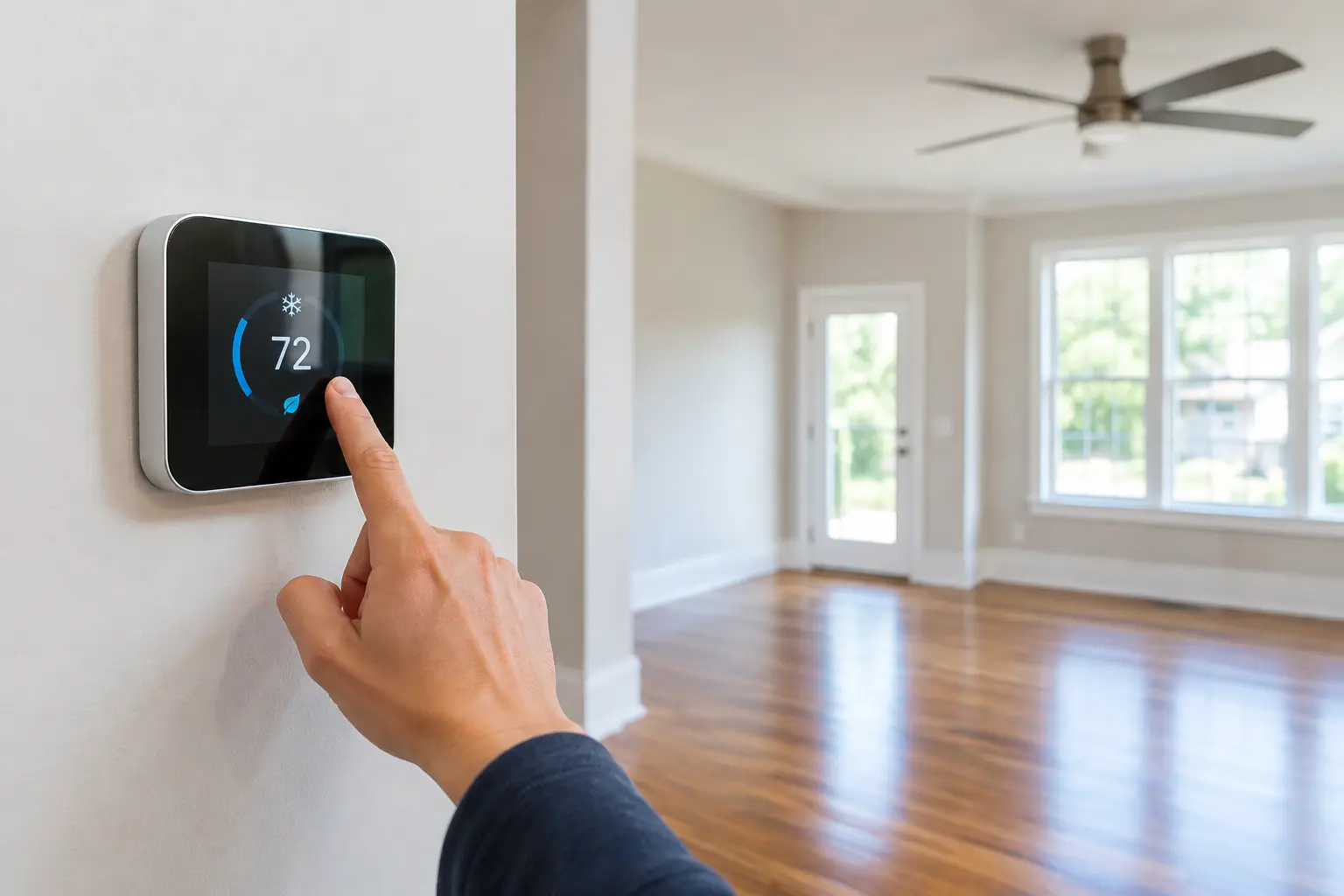
When owners ask, “should empty homes run HVAC?” the real concern is usually not comfort. It is what happens inside a closed house or condo while nobody is there to notice a problem. In Puerto Peñasco, an unoccupied property can collect windblown dust, hold coastal humidity, develop stale odors, and put unnecessary strain on air-conditioning equipment.
Turning the system completely off can save a little electricity in the short term. It can also leave the home with no temperature control, no moisture management, and no regular airflow. For many second homes, the better decision is to keep the HVAC system running at a conservative setting, with a plan for filters, inspections, and someone who can check the property when needed.
Should Empty Homes Run HVAC? Usually, Yes
Most empty homes should run HVAC, but not at the same setting used when the family is in residence. The goal is not to make an empty home feel cool. The goal is to protect the building, furnishings, ductwork, and equipment from excessive heat and moisture.
For many properties, a cooling set point around 78 to 82 degrees is a reasonable starting range. The correct setting depends on the unit’s condition, the home’s insulation, window exposure, occupancy schedule, and whether the system actually manages humidity well. A shaded condo with good windows may hold conditions differently than a large beach home with sun-facing glass and an older air-conditioning unit.
Humidity deserves as much attention as temperature. Warm, humid indoor air can feed musty odors and mold growth on surfaces, inside closets, around supply registers, and in dirty ductwork. Air conditioning removes moisture only when it is operating correctly and cycling enough to do the job. If the equipment is oversized, poorly maintained, or set too warm, it may not control indoor humidity as expected.
A simple indoor temperature and humidity monitor gives owners useful information instead of guesswork. As a general target, indoor relative humidity should remain below 60 percent. If readings stay high for days, there may be an air-conditioning issue, a moisture intrusion problem, or a home that needs a different operating strategy.
What Happens When You Shut Everything Down
A vacant home does not stop interacting with its environment just because the doors are locked. In Puerto Peñasco, wind can drive fine dust into gaps around doors, windows, and exterior penetrations. Salt air and moisture can affect metal components. A closed-up home also traps whatever is already inside, including cooking odors, pet odors, renovation dust, and contamination left in the ducts.
When HVAC stays off for long periods, indoor temperatures can climb well above outdoor comfort levels. That heat affects more than people. It can dry out some materials, stress electronics, and make refrigerators, cabinet interiors, closets, and bathrooms smell stale when the home is reopened. If moisture is also present, warm stagnant conditions can support mold growth.
The duct system is often overlooked. Dust, construction debris, pest material, and old filter bypass can sit in duct runs for years. When the system eventually comes back on, that material may be pushed toward registers and into the living space. If a property has a musty smell only when the AC starts, visible dust around vents, weak airflow, or unexplained debris from registers, the answer is not to keep adjusting the thermostat. The system needs to be inspected.
Avoid the Two Common Extremes
There are two approaches that create trouble: shutting the HVAC off completely and running it at an unnecessarily cold temperature all summer.
Turning the system off may make sense for a very short absence in mild weather, or during a planned repair where equipment cannot safely operate. It is riskier when a home will sit vacant for weeks or months through hot, humid conditions. A property manager may enter the home occasionally and find no obvious problem, while moisture and contamination are already building in hidden areas.
At the other extreme, setting the thermostat too low wastes energy and can create its own moisture problems. Cold supply air meeting warm, humid air can lead to condensation around vents, poorly insulated ducts, and other cold surfaces. A system that runs constantly may also reveal underlying issues such as a dirty coil, clogged filter, leaking ductwork, or a unit that cannot keep up with the home.
The right plan is controlled operation, not neglect and not overcooling.
Set Up the Home Before You Leave
Before closing up a second home, give the HVAC system a practical check. Replace the filter with the correct size and type for the equipment. Do not install an overly restrictive filter just because it sounds better. A filter that is too dense for the system can reduce airflow and strain the blower. If the home gets dusty quickly, that may point to duct leakage, gaps in the return system, dirty ducts, or an infiltration issue rather than simply a need for stronger filters.
Make sure supply registers and return grilles are open and not blocked by furniture, rugs, or stored belongings. Closing multiple vents to save money is not a reliable strategy. It can disrupt airflow and increase pressure in ductwork that may already have leaks or loose connections.
For an extended absence, these four steps provide a useful baseline:
- Set the thermostat for property protection, not occupied comfort.
- Check or replace the filter before leaving, then schedule filter changes based on dust conditions and system use.
- Use a monitor that records temperature and humidity, especially if nobody visits the property regularly.
- Arrange periodic interior checks after storms, power outages, or long stretches of vacancy.
If your thermostat or monitoring system sends alerts, make sure the contact information is current and that someone local can respond. An alert has limited value if it only tells an owner in another state that the house has been hot for three days.
Watch for HVAC Problems That Do Not Show Up on a Thermostat
A thermostat can confirm that the house is cooling. It cannot tell you whether the ducts are dirty, damaged, disconnected, or contaminated. It cannot show mold-like buildup near an evaporator area, pest debris in a duct run, or construction material left behind after a remodel.
Pay attention when you arrive at the home. A foul or musty odor that appears when the system starts is a warning sign. So are visible dust streaks around registers, rooms that stay warmer than others, weak air from a vent, black spotting near a grille, or debris blowing into the room. These are not normal conditions to ignore in a vacation property.
New owners should be especially cautious. A home can look clean after a sale while the concealed HVAC system tells a different story. The same applies after remodeling. Drywall dust, sawdust, insulation fragments, and other debris can enter open registers or returns during construction. If that material was not removed, it can continue circulating after the project looks finished.
A camera-based duct inspection provides visible evidence of what is inside. That matters because cleaning should be based on actual conditions, not a generic claim that every duct system needs service on a fixed schedule. An inspection can identify accumulated dust, possible microbial growth, damaged flex duct, loose connections, inaccessible problem areas, and the repair path needed when a contractor must open walls or ceilings.
When to Schedule an Inspection Before Leaving
An inspection is a sensible step before a long vacancy if the home has a persistent odor, a history of water intrusion, visible dust buildup, pest activity, or poor airflow. It is also useful after construction, after purchasing a home, or when the HVAC equipment has been working harder than it should.
Clean It 4U Mexico uses camera inspection to show owners what is hidden in their ducts and vents, then recommends the next step based on what is found. In some homes, focused cleaning and removal of contamination are appropriate. In others, the evidence points to duct damage or a repair that needs to be coordinated with a qualified contractor. Clear photos and direct findings are more useful than guessing from across the border.
Your empty home should not be left to bake, trap moisture, and circulate old dust the moment you return. Set the system for protection, monitor the indoor conditions, and address odors or airflow problems before they become a much larger repair.