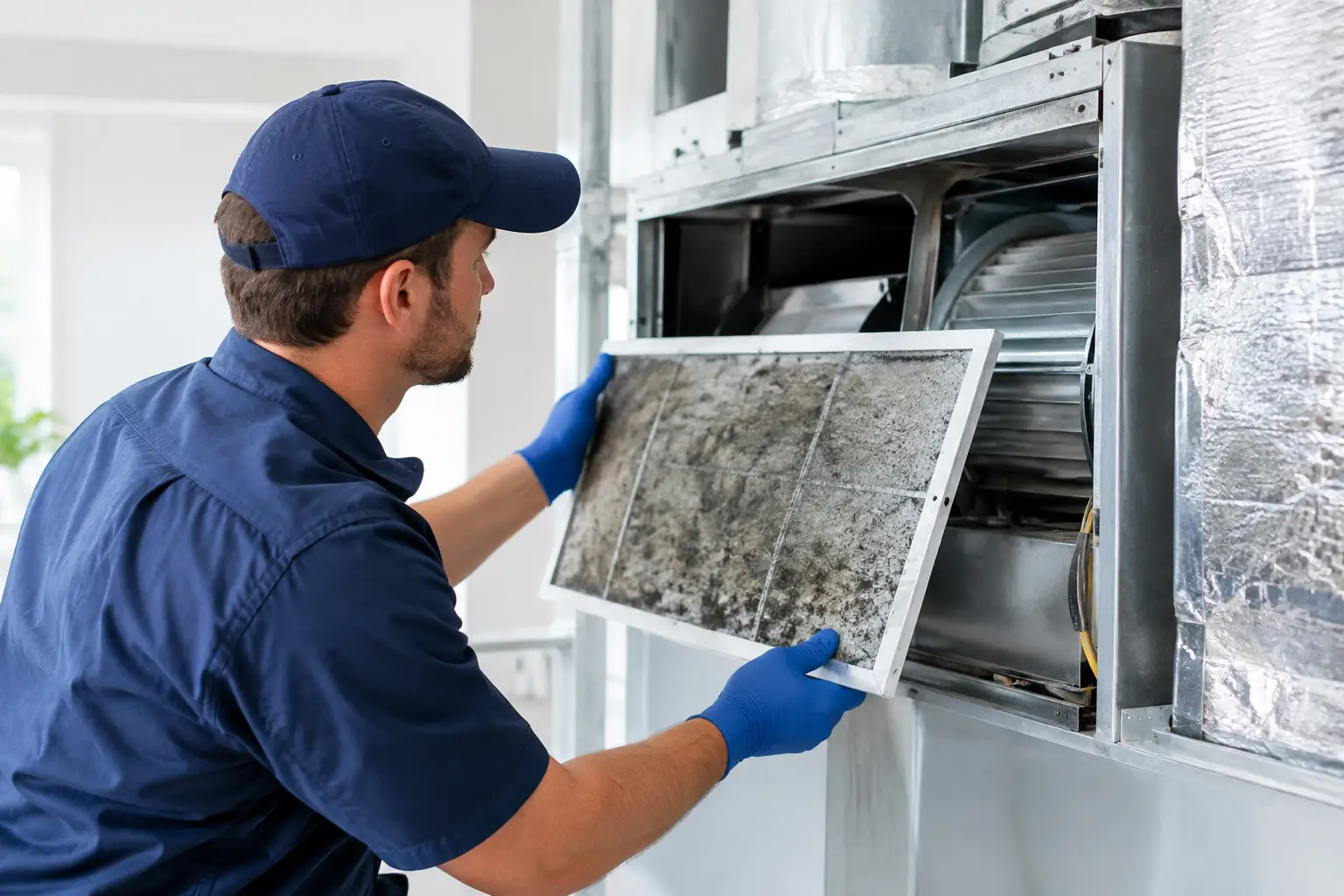
A musty smell that appears when the air conditioner starts is not something to cover up with candles or room spray. In a coastal home or condo, mold remediation may be needed when moisture, dust, and organic debris have created contamination inside or around the HVAC system. The concern is not just the odor. Hidden mold and moisture problems can affect indoor comfort, aggravate respiratory symptoms for sensitive occupants, and put added strain on expensive air-conditioning equipment.
For owners who are away from Puerto Peñasco much of the year, the problem can remain unnoticed until the home is opened for a visit. A closed-up property, humid outdoor air, wind-driven dust, dirty filters, plumbing leaks, and condensation around AC components can all create the conditions mold needs. The right response starts with finding the source and seeing what is actually inside the system.
Mold Is a Moisture Problem First
Mold spores are common in indoor and outdoor air. Their presence alone does not automatically mean a home has a serious mold issue. Mold growth becomes a problem when spores land on a damp surface with something to feed on, such as dust, drywall paper, wood, insulation, or debris inside a neglected system.
That is why spraying fragrance into vents or wiping a visible register is not mold remediation. If the moisture source remains, growth can return. If contamination is deeper in the ductwork, air handler, drain area, or insulation, surface cleaning may leave the main issue behind.
In HVAC systems, common moisture sources include a clogged condensate drain, an improperly insulated duct, an air leak that pulls humid air into the system, a roof or plumbing leak, or an AC unit that is not draining or operating properly. A home that is shut down for long periods can also have limited airflow and elevated humidity. In this environment, dust becomes more than a housekeeping issue. It can provide material for mold growth once moisture is present.
Signs That Call for a Mold Remediation Inspection
A visible patch of growth is an obvious warning, but it is not the only one. Pay attention if a musty, sour, or foul odor becomes stronger when the AC runs. Dust blowing from registers, dark staining around vents, recurring condensation, water marks near ceiling registers, or a sudden drop in airflow can also point to a problem that needs inspection.
Health symptoms deserve attention, especially when they improve after leaving the property. Coughing, irritated eyes, sinus discomfort, headaches, or increased allergy symptoms can have many causes, so they do not prove mold on their own. But they are a good reason not to guess. A documented HVAC inspection can help determine whether there is dust buildup, pest contamination, moisture damage, visible growth, damaged ductwork, or another source of poor indoor air quality.
Recent remodeling is another high-risk situation. Construction dust, drywall residue, sawdust, and open duct runs can leave heavy debris inside the system. If the property was also exposed to humidity or water during the project, that debris can hold moisture and create a more favorable environment for contamination.
Why a Camera Inspection Comes Before Cleaning
Ductwork is hidden behind walls, ceilings, soffits, and chases. A technician cannot responsibly tell you that ducts are clean or contaminated simply by looking at a grille from the room. Camera-based inspection gives property owners a clearer answer. It shows buildup, damaged sections, disconnected runs, construction debris, insect or rodent evidence, and areas where moisture may be affecting the system.
Visual documentation matters, particularly for second-home owners coordinating service from another state. You should be able to see the condition being discussed and understand what was found, what can be cleaned, and what may require repair by the appropriate contractor. This keeps the conversation practical. Not every dark mark is mold, and not every odor begins in the ducts.
An inspection also helps avoid unnecessary work. If contamination is limited to a register, return grille, or accessible section of duct, targeted cleaning may be appropriate. If there is wet insulation, a damaged duct line, a leak in the building, or an ongoing drainage issue, cleaning without correcting that condition is a short-term fix at best.
What Proper HVAC Mold Remediation Involves
Mold remediation is not one single service. The correct scope depends on where the material is located, how widespread it is, whether the area is dry, and whether damaged materials can be safely cleaned or need to be removed.
For an HVAC-related issue, the work often begins by identifying and correcting the moisture source. Then accessible registers, vents, return areas, and contaminated duct surfaces can be cleaned using equipment designed to capture fine debris rather than simply push it farther into the home. HEPA-filtered vacuum equipment is especially valuable because it helps collect dust and particulate during removal.
Cleaning alone is not a substitute for repairing mechanical or building problems. A crushed duct, failed insulation, leaking condensate line, or inaccessible damaged section may need a separate repair path. When ductwork cannot be reached directly, a thorough inspection should identify the location and condition clearly enough for the right repair professional to address it.
There is also a point where a homeowner should bring in a qualified mold specialist or restoration contractor. Large areas of visible growth, water-damaged drywall or insulation, sewage-related contamination, repeated flooding, or a suspected hidden building leak may go beyond routine HVAC cleaning. The goal is not to oversell a duct service. The goal is to remove what can be safely removed and direct you to the right next step when the source is elsewhere.
What Not to Do When You Suspect Mold
Do not run the AC continuously just to hide an odor. If the odor gets worse when air moves through the system, operating it may distribute dust and odors through more rooms. It is reasonable to limit use until the system can be checked, especially if occupants are experiencing symptoms.
Avoid foggers, heavily scented products, and random chemical sprays inside vents. These products can mask a smell without removing the debris or moisture that caused it. They may also leave residue on HVAC components. Never disturb visible growth in a way that creates airborne dust, and do not assume bleach will solve contamination inside porous materials or concealed duct areas.
Changing the filter is still worthwhile, but it is not mold remediation. A clean filter supports airflow and helps protect the system from ordinary dust. It cannot correct wet duct insulation, clean construction debris from a return line, or repair a condensate problem.
Prevention Protects Your Home Between Visits
For vacation properties, prevention comes down to moisture control and regular observation. Use quality filters that fit correctly, and replace them on a schedule appropriate for occupancy, pets, dust levels, and renovation activity. Have the condensate drain and AC operation checked before the hottest months. If the property will sit vacant, consider humidity monitoring and have someone check for water leaks, unusual odors, or AC drainage problems.
After a remodel, roof repair, plumbing leak, pest issue, or long vacancy, an HVAC camera inspection can be a smart part of reopening the home. It is easier and less costly to address dust, debris, or early moisture damage before it becomes a larger contamination problem.
Clean It 4U Mexico approaches these concerns inspection first: see the hidden condition, document it, remove the contamination that can be reached, and identify the repair work needed when it cannot. If your AC system smells musty, blows visible dust, or has been sitting closed up in a humid coastal property, schedule an inspection before the next stay. Clear evidence and a specific plan are far more useful than guessing what is inside the ducts.