A home can look spotless and still circulate dust, odors, and contaminants every time the air conditioner starts. Effective air filtration is one of the first lines of defense, especially in Puerto Peñasco homes and condos exposed to windblown sand, coastal humidity, long cooling seasons, remodeling dust, and periods of vacancy.
The key is knowing what a filter can handle and what it cannot. A better filter can capture more particles moving through the HVAC system. It cannot remove debris already packed inside ducts, correct a damaged duct run, or solve an active moisture or mold problem. Those conditions need to be identified before they become an ongoing air-quality and equipment problem.
What Air Filtration Actually Does
Your HVAC filter sits in the return-air path. Before air reaches the blower and cooling equipment, the filter is meant to catch airborne material such as dust, lint, pollen, pet dander, and other particles. This protects the mechanical components while reducing what gets recirculated through the living space.
Filtration matters in a desert-coastal environment because fine dust does not stay outdoors. It enters through door openings, gaps around windows, construction activity, patio traffic, and normal daily use. A vacant home may also have its system running intermittently with nobody present to notice a dirty filter, weak airflow, or a growing musty smell.
A clean, properly fitted filter helps the system breathe. When a filter becomes loaded with dust, the blower has to work harder to pull air through it. That strain can reduce airflow, contribute to frozen coils, raise energy use, and place added stress on expensive air-conditioning equipment.
The Filter Rating Is Not the Whole Story
Higher-rated filters generally capture smaller particles, but the highest rating is not automatically the right answer for every home. Dense filters can restrict airflow if the HVAC system was not designed for them, if the filter rack is undersized, or if the filter is left in place too long.
For many residences, a quality pleated filter offers a practical balance between particle capture and airflow. Homes with pets, frequent occupancy, allergy concerns, or heavy dust exposure may need more frequent replacement or a filtration upgrade. The right choice depends on the equipment, filter size, return-air design, and the condition of the ducts.
Do not stack filters together or force a filter into a slot where it does not fit. Air will take the easiest available path. If there are gaps around the filter, unfiltered air can bypass it and carry dust directly into the blower compartment and duct system.
Signs Your Current Filtration Is Falling Short
A little dust on furniture is normal. Heavy dust shortly after cleaning, however, deserves a closer look. The same is true when one room gets noticeably weaker airflow or a particular vent releases a stale smell when the system turns on.
Watch for these common warning signs:
- Dark buildup around supply registers or return grilles
- A filter that looks dirty well before its expected change date
- Musty, sour, or foul odors when the AC begins a cooling cycle
- Excessive dust after a remodel, storm, pest issue, or extended vacancy
- Hot and cold spots that may indicate airflow restrictions or damaged ductwork
None of these symptoms proves that the filter is the only problem. A dirty return, duct leakage, construction debris, microbial growth, or a contamination source inside the system can create similar complaints. That is why guessing from the grille alone often leads to wasted money.
When a Filter Change Is Not Enough
Filters catch material before it reaches much of the HVAC system. They do not pull out old debris that has already settled in ducts, registers, blower areas, or inaccessible duct runs. They also do not repair torn flex duct, disconnected sections, crushed ductwork, or gaps that draw dusty attic or wall-cavity air into the system.
This matters after construction and remodeling. Drywall dust, sawdust, insulation fibers, and other fine material can travel farther than homeowners expect. If registers were left open during work, visible dust may be only a small part of what entered the system.
Odors require the same practical approach. Sprays and scented products may cover a smell for a few hours, but they do not remove the source. A musty odor can come from moisture-related contamination. A sharp or foul smell may point to pest activity, decaying debris, or a mechanical issue. The answer is not to treat every odor as mold or assume every dark spot is black mold. The answer is to inspect the area, document what is present, and choose the right corrective work.
Air Filtration and Duct Cleaning Work Together
Air filtration and duct cleaning are different jobs, but they support each other. Cleaning removes accumulated contamination and debris from accessible parts of the system. Proper filtration helps keep the cleaned system from loading up again as quickly.
For a home with a questionable history, camera-based inspection is the most useful starting point. It gives the owner visual information about conditions that cannot be seen through a register opening. That may include construction debris, dust accumulation, damaged or disconnected duct sections, moisture staining, or conditions that require a contractor rather than a cleaning crew.
Clean It 4U Mexico uses inspection findings to separate cleaning needs from repair needs. If a duct section cannot be directly accessed, locating the issue precisely helps owners and contractors avoid opening more walls or ceilings than necessary. That is a better path than paying for a broad service without knowing what is actually inside the system.
A Practical Filtration Routine for Second Homes
Second-home owners need a plan that works even when they are out of state. A filter should not be treated as a once-a-year task, particularly when the AC runs hard during warm months or the property sees frequent guest turnover.
Start by checking the filter monthly during high-use periods. Many homes need a replacement every one to three months, but the right interval depends on occupancy, pets, nearby construction, dust exposure, and filter type. Write the installation date on the filter frame so there is no guessing later.
Before purchasing cases of filters, confirm the exact size and airflow direction. A filter that is one inch too small may leave bypass gaps. A filter installed backward can collapse or perform poorly. If the filter repeatedly becomes dirty very quickly, do not simply change it more often without asking why. It may be doing its job in an unusually dusty environment, or the system may be pulling contamination through return leaks or poorly sealed areas.
If you use a property manager or housekeeping team, make filter checks part of their turnover checklist. Ask them to report odors, weak airflow, water marks near registers, pest evidence, or unusually dirty grilles. Those observations can catch a problem before your next visit becomes an expensive repair appointment.
Choosing Between Whole-Home and Portable Filtration
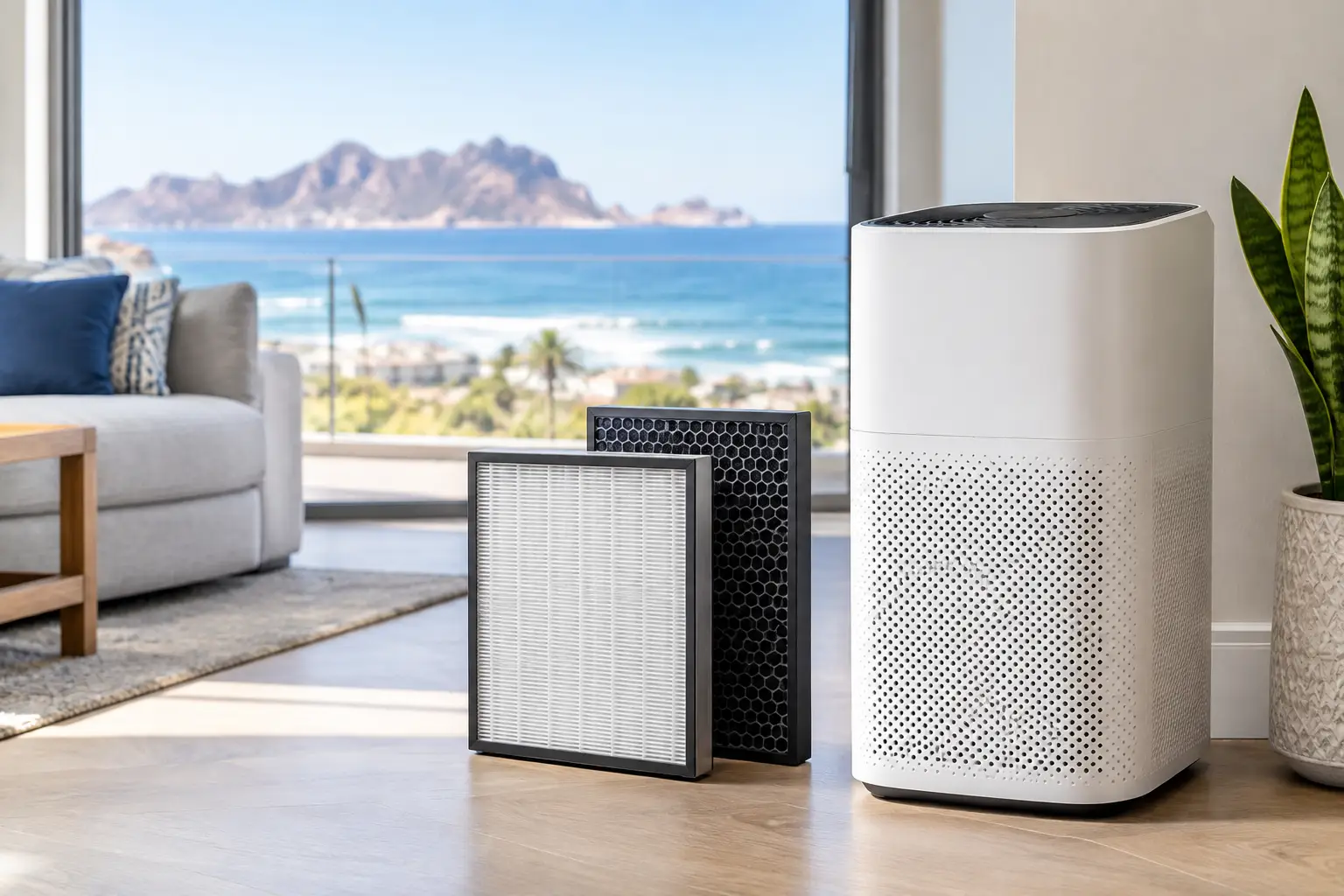
A portable air cleaner can be helpful in a bedroom, office, or other frequently used room. It is particularly useful when someone has allergy sensitivities or when a room needs added particle control. But it only treats the air moving through that unit, and it does not protect the HVAC equipment from debris.
Whole-home filtration works through the central system and can improve the air circulated throughout the residence. It requires proper sizing and installation. In some homes, the best improvement is not a more restrictive filter but repairing return leaks, correcting duct damage, cleaning contamination, or improving the filter cabinet so air cannot bypass the media.
There is no one-size-fits-all answer. A condo used a few months each year has different needs than a full-time residence with pets and children. The condition of the HVAC system should guide the decision.
A clean filter is simple, inexpensive protection. When dust, odors, visible buildup, or airflow problems continue after the filter is changed, treat that as a reason to inspect the hidden parts of the system. Clear camera findings and a direct plan for cleaning or repair give you a better way to protect the air your home circulates every day.