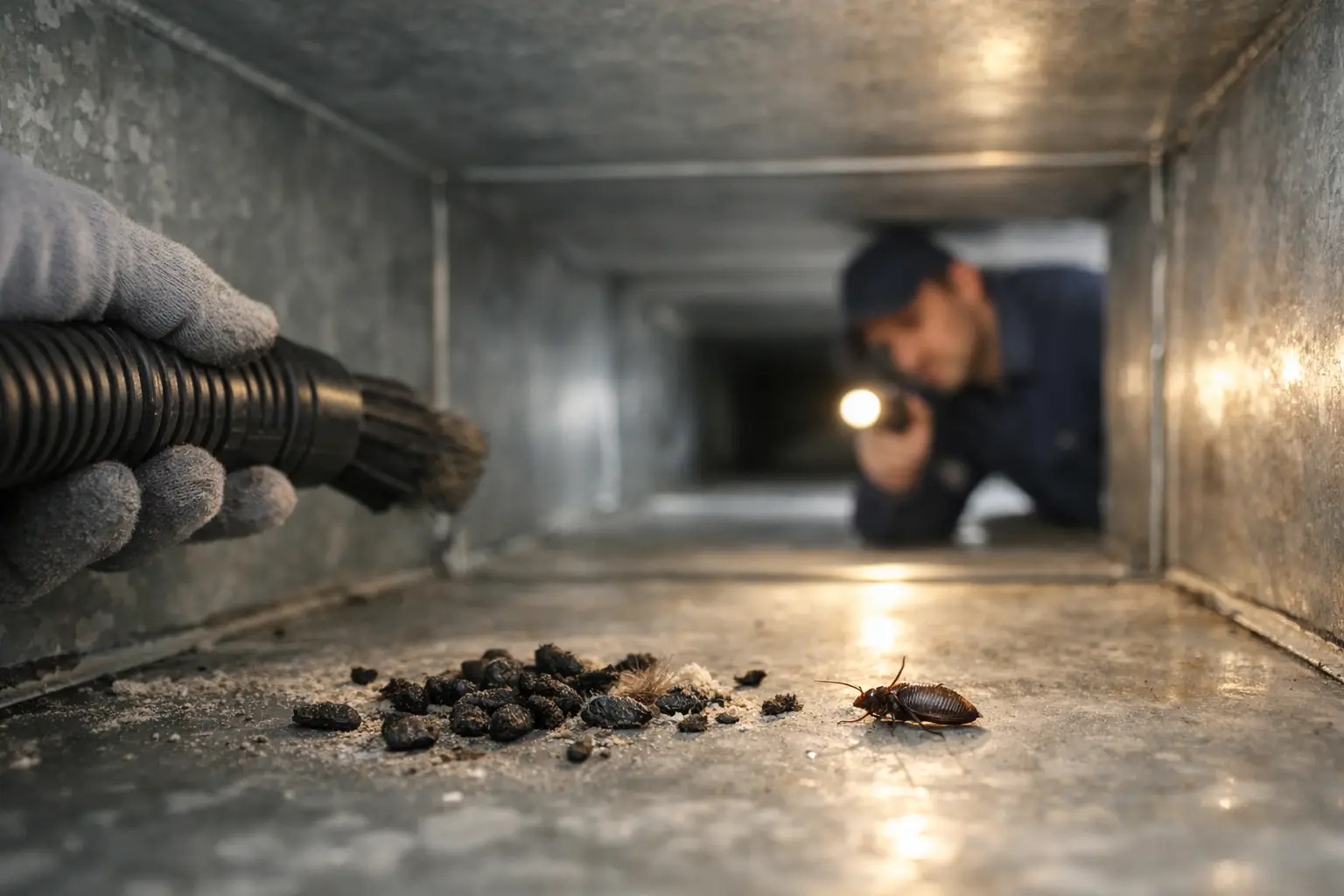
A bad smell starts when the AC turns on. A bedroom vent has dark specks around it. Or a camera inspection reveals nesting material where clean conditioned air should be moving. Pest droppings in air ducts are not a normal dust problem, and they should not be handled by simply changing a filter and hoping the odor goes away.
In Puerto Peñasco, windblown dust, seasonal vacancy, coastal humidity, and openings around exterior ductwork can give pests an opportunity to enter a home. Rodents, birds, insects, and other animals may leave droppings, urine, nesting materials, dead pests, or damaged insulation inside ducts. Once the HVAC system runs, it can carry odors and loose contaminated debris toward supply vents throughout the house or condo.
The right response begins with finding out exactly what is inside the ductwork, where it entered, and whether the system can be safely operated before cleanup.
Why Pest Droppings in Air Ducts Need Prompt Attention
Ducts are concealed, so contamination often sits unnoticed until there is an odor, a visible mess at a register, or a drop in airflow. That does not mean the problem is minor. Droppings can break down into fine particles, while urine and nesting material can create persistent odors that return whenever the air conditioner starts.
The concern is not limited to cleanliness. Animal waste can contain bacteria and other contaminants. People with asthma, allergies, respiratory sensitivity, or weakened immune systems may be more affected by dirty air and strong odors. A vacation property can be especially vulnerable because an infestation may develop while the home is empty and the HVAC is not being checked regularly.
Pests can also cause mechanical damage. Rodents may chew flexible ductwork, wiring, insulation, or nearby materials. A torn or crushed duct can pull dusty attic or crawlspace air into the system, reduce cooling performance, and force expensive AC equipment to work harder. Cleaning the droppings without locating the entry point can leave you with the same problem a few weeks later.
Signs You May Have Contamination Inside the Ducts
You may not see an animal in the home. Many infestations stay hidden in ceiling cavities, wall chases, attics, and ducts. Pay attention to changes that occur when the system cycles on.
Common warning signs include:
- A musky, ammonia-like, foul, or dead-animal odor from one or more vents
- Dark pellets, insect debris, feathers, nesting material, or unusual dust near registers
- Scratching, scurrying, chirping, or fluttering sounds above ceilings or inside walls
- Weak airflow from a vent that once cooled normally
- Repeated pest activity in the attic, garage, utility area, or around exterior penetrations
- A newly purchased, recently remodeled, or long-vacant property with an unknown duct history
Visible material at a register is only part of the picture. The source may be several feet away, at a disconnected duct joint, near the air handler, or in a section of ductwork that cannot be seen without a camera. Do not assume a clean-looking vent cover means the ducts behind it are clean.
Do Not Blow the Problem Through the House
If you suspect active pest contamination, avoid running the HVAC system more than necessary until the condition is assessed. Every cycle can move odors and loose debris through the supply side of the system. Closing a single register may reduce the smell in one room, but it does not remove the contamination or repair damaged ductwork.
Do not reach deep into a duct with a household vacuum, broom, or compressed air. That approach can scatter particles farther down the line and may damage flexible ducts. Spraying perfume, disinfectant, bleach, or odor products into vents is not a cleanup plan either. Chemicals can leave residue, mask the real issue, and fail to remove droppings, urine, nesting material, or a dead animal.
If you find droppings in an accessible area, keep children and pets away from it. Avoid dry sweeping or brushing. Any cleanup should be done with appropriate protective equipment and controlled removal methods, particularly when the material is old, dried, or widespread.
Inspection First: Find the Source Before Cleaning
A proper duct inspection should answer practical questions, not give you a vague recommendation to clean everything. Where is the contamination? Is it limited to one branch duct or present near the return and air handler? Is there evidence of an active pest? Is the duct torn, disconnected, crushed, or open to an attic or wall cavity?
Camera-based inspection gives homeowners and condo owners a clear look at conditions hidden inside the system. It can document droppings, debris, damaged insulation, construction materials, mold-like buildup, and inaccessible duct failures. Photos or video help you understand what service is needed and give repair professionals useful information when a section of ductwork cannot be reached directly.
There are situations where a pest-control professional should be involved before duct cleaning. If animals are active, the infestation must be addressed and entry points must be sealed. Removing contamination before stopping the pests may only create a clean place for them to contaminate again.
What Professional Cleanup Should Address
The scope depends on what the inspection finds. A few droppings near one accessible register are different from widespread contamination across supply ducts, returns, and the air-handler area. The goal is controlled removal, not a quick surface wipe.
A thorough cleanup typically includes removal of droppings, nesting debris, dust buildup, and other loose material from affected duct runs and vent components. HEPA-filtered equipment helps capture fine debris during the process rather than recirculating it into living spaces. Registers and grilles should be cleaned as part of the job, since they collect dust and can hold odor-causing residue.
The air handler, return area, filter compartment, and accessible coils may also need inspection. If a pest entered through damaged ductwork, that damage needs a repair path. In some homes, direct access is limited by ceilings, finishes, or construction layout. In those cases, precise camera findings can identify the location so a qualified contractor can make the smallest practical opening and repair the problem correctly.
Odor remediation may be appropriate after physical contamination has been removed. It should follow cleaning, not replace it. If urine-soaked insulation, a dead animal, or severely damaged flex duct is found, replacement of that affected section may be more reliable than trying to treat an embedded odor.
Prevent the Next Infestation
Once the ducts are cleaned and repairs are made, the home needs protection from repeat entry. Exterior openings around duct penetrations, roof lines, utility connections, attic vents, and damaged screens should be checked. Pest exclusion is a separate but necessary part of protecting the HVAC system.
Keep filters changed on schedule, usually every one to three months depending on occupancy, pets, dust conditions, and filter type. A filter will not stop an animal from entering damaged ductwork, but it can reduce dust accumulation and help you spot unusual debris in the return side of the system.
For homes that sit vacant part of the year, arrange periodic property and HVAC checks. Ask for a look at vents, attic access areas, utility spaces, and any signs of odor when the system first runs. After remodeling, request an inspection if vents were left open or ductwork may have been disturbed. Construction debris and open duct connections can create conditions that pests use.
When to Schedule a Duct Inspection
Schedule an inspection promptly if you smell animal odors from vents, see droppings near registers, hear activity in ceilings, or notice airflow changes after a pest issue. It is also a smart step before moving into a previously vacant home or condo, particularly if you do not know the property's maintenance history.
Clean It 4U Mexico uses camera-led inspections to show property owners what is actually inside their ductwork, followed by targeted cleaning and practical guidance when repairs are needed. You deserve more than a guess about hidden contamination.
A clean vent cover is reassuring, but the real answer is inside the duct. Get the system inspected, remove the contamination properly, repair the entry point, and let your home circulate clean air again.