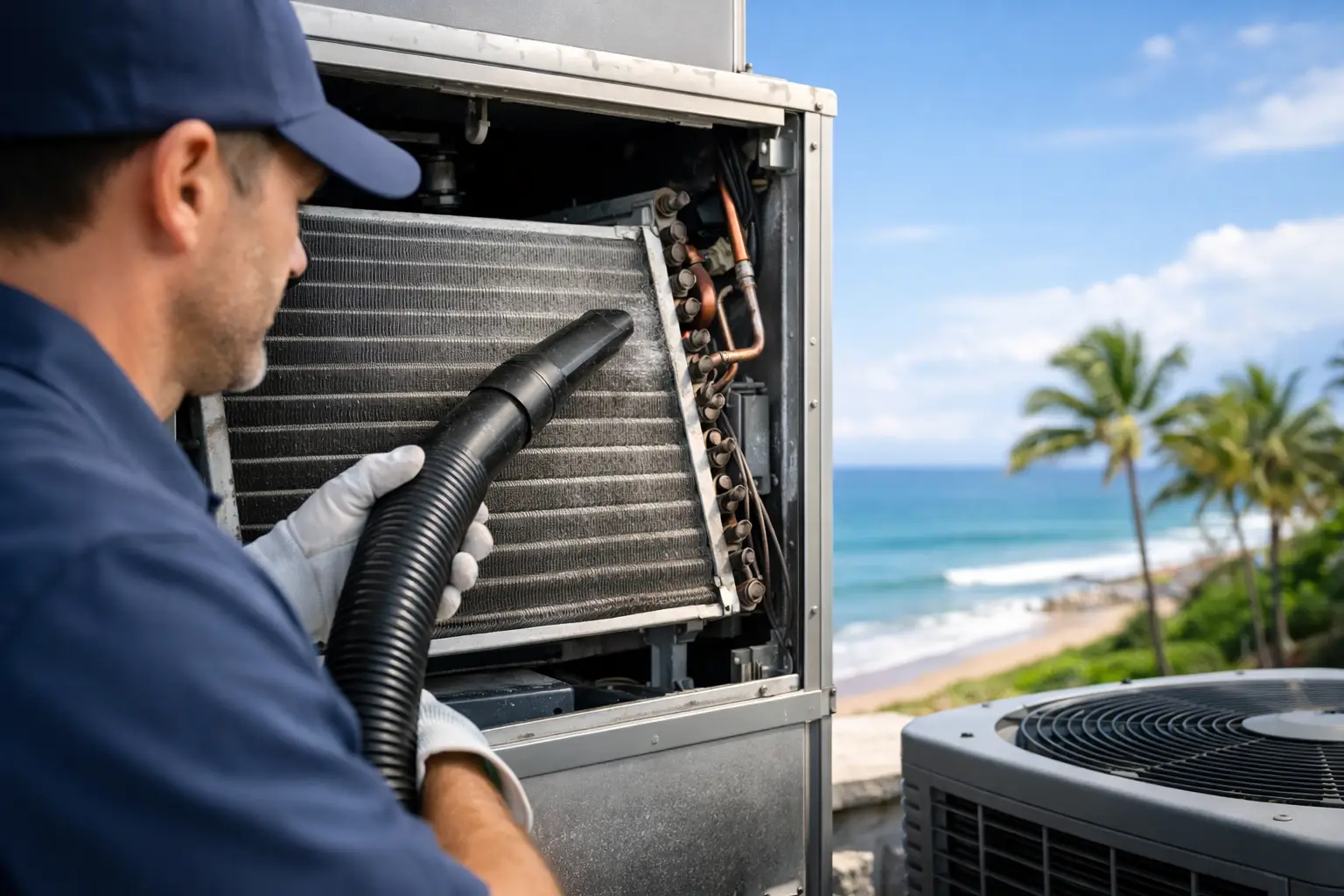
Your air conditioner may still turn on, cool the room, and look fine from the outside while the air handler is carrying a buildup of dust, construction residue, moisture-related contamination, or pest debris. An air handler cleaning service addresses the part of the HVAC system that many property owners never see but depend on every day. In Puerto Peñasco, where windblown dust, coastal humidity, long cooling seasons, and vacant periods can all affect a home, hidden buildup deserves a close look.
The air handler is not just a metal box in a closet, utility room, or ceiling area. It contains the blower components that move conditioned air through the home. When contamination builds up there, the system can distribute odors and fine particles while working harder to deliver the airflow your rooms need.
What an Air Handler Cleaning Service Looks For
A proper cleaning starts with inspection, not assumptions. If someone promises to clean the system without first looking at the condition of the blower area, evaporator section, drain pan, filter area, and connected ducts, they may miss the actual source of the problem.
Camera-based inspection can show what is hidden beyond the registers and access panels. This matters when a homeowner notices a musty smell but cannot tell whether it is coming from dirty ducts, moisture around the coil, a damaged duct connection, or an issue inside the air handler itself. Photos and video give you a clearer reason to clean, repair, or monitor a specific area.
During an inspection, the concern may be ordinary accumulated dust. It may also be more serious: black residue that needs mold-focused attention, insulation fragments, sheetrock dust left after a remodel, pest contamination, standing water signs, or debris from construction that was never removed before the system was used. Each condition calls for a different response. Cleaning a blower and accessible surfaces will not correct an active moisture source or a disconnected duct, and a responsible service provider should tell you that directly.
Why Puerto Peñasco HVAC Systems Get Dirty Faster
Coastal desert properties face a combination of conditions that can be hard on HVAC equipment. Fine dust enters around doors, windows, and outdoor living areas. Humidity can create condensation concerns around cold HVAC components. Wind can carry sand and debris, and homes that sit closed for part of the year may develop stale odors that are only noticed when owners return.
Condo owners can face additional complications. Ductwork may run above ceilings or through areas that are not easily accessible, so a visible dirty register does not explain the full condition of the system. A camera inspection helps identify whether the problem is localized or whether there is damage, debris, or contamination farther inside the duct run.
Recently remodeled homes need attention as well. Drywall dust, sawdust, paint residue, and other construction debris can move into return openings or exposed equipment. A new-looking room does not mean the HVAC system was protected during the work. If the AC was operated while contractors were sanding, cutting, or sweeping nearby, the air handler and ducts may have collected material that does not belong there.
Signs You Should Schedule a Cleaning Inspection
Do not wait for a complete AC failure before checking the air handler. Most contamination problems show smaller warning signs first. You may see dust collecting quickly around supply vents, notice weak airflow in rooms that once cooled well, or smell a musty, sour, or foul odor when the system starts.
Other signs include visible dark buildup around vents, recurring allergy-like irritation when the AC runs, unusual debris coming from registers, or a filter that becomes heavily loaded much sooner than expected. Pest evidence near the equipment, water staining, or a drain pan that appears dirty are also reasons to inspect promptly.
For a vacation property, timing matters. Schedule an inspection after purchasing a home or condo, after a major renovation, after evidence of a roof or plumbing leak, or before returning for an extended stay. It is easier to deal with contamination before the system has circulated it throughout the property for another season.
Cleaning Is About Airflow and Equipment Protection Too
Health and comfort are usually the first concerns, especially when odors or suspected mold are involved. But a dirty air handler can also affect mechanical performance. Dust and debris around blower components can interfere with airflow. Restricted airflow can leave rooms unevenly cooled and may increase the strain on expensive air-conditioning equipment.
The exact impact depends on the equipment design, the amount and type of buildup, filter condition, duct condition, and whether another mechanical issue is present. That is why a cleaning service should not claim that every problem will be solved by cleaning alone. A weak room may have a crushed, disconnected, undersized, or leaking duct. A recurring odor may point to moisture that has to be corrected before cleaning will hold.
The goal is to remove accessible contamination thoroughly, identify what cannot be reached, and give the homeowner practical next steps. If duct damage is concealed behind a wall or ceiling, clear inspection findings can help a contractor make the right repair without unnecessary demolition.
What Thorough Cleaning Should Include
An air handler cleaning service should be controlled and methodical. The work should protect the home while removing material from the equipment and accessible duct areas, not simply blow dust deeper into the system or into the living space.
At Clean It 4U Mexico, the focus is on visible findings and targeted removal. HEPA-filtered equipment is used to capture debris, with suction power described as six times stronger than a household vacuum. Registers and vents can be cleaned, accessible buildup can be removed, and the inspection can document conditions that require repair or additional moisture control.
If mold-like growth or heavy odor contamination is present, the process should be handled as more than routine dust removal. The affected surfaces, source of moisture, and extent of spread all matter. Property owners deserve a plain explanation of what was found, what was cleaned, and what must be repaired to prevent the same condition from returning.
Protect the System Between Appointments
Regular filter changes are one of the simplest ways to protect an air handler. In a dusty property, a filter may need attention more often than the schedule printed on the package suggests. Check it monthly during periods of frequent AC use, after dust storms, and following remodeling work. A visibly loaded filter should be replaced rather than left in place until a calendar date.
Keep return vents clear of furniture and avoid operating the system during messy construction unless return openings and equipment are properly protected. If you manage a seasonal home remotely, ask someone to report unusual odors, visible vent dust, water around the equipment, or pest activity before a small issue becomes a larger cleanup.
Do not cover up a foul smell with air fresheners. Odor is useful information. It may be dust, moisture, a drain issue, pest contamination, or material trapped inside the system. Finding the source is safer than masking it.
Get Proof Before You Commit to Repairs
Homeowners should not have to guess what is inside their HVAC system or approve broad repairs without evidence. A good inspection gives you a factual starting point: what is dirty, where the issue is located, whether cleaning is appropriate, and whether another professional needs to repair a concealed section of ductwork.
If your Puerto Peñasco home or condo has persistent odors, dusty vents, reduced airflow, renovation debris, or concerns about hidden mold, schedule an inspection while the evidence can still be seen. Clean air starts with knowing what your system is actually moving through the home.