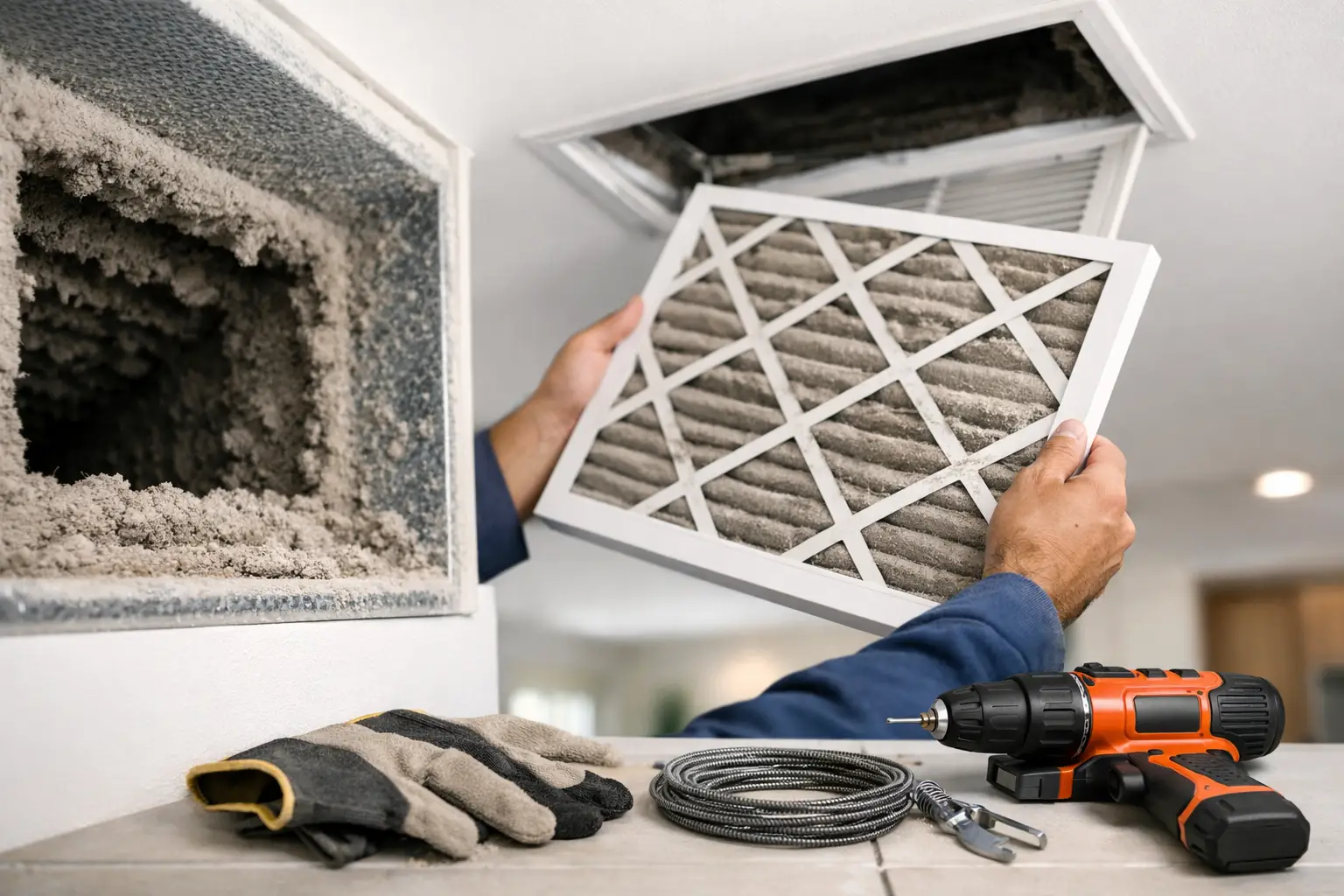
Your bedroom is warm, the living room barely cools down, and the AC seems to run far longer than it used to. Before assuming the equipment has failed, look at what may be restricting the system from the inside. Reduced airflow from dirty ducts is a common problem in Puerto Peñasco homes and condos, where windblown dust, coastal humidity, remodeling debris, and long periods of vacancy can all affect the HVAC system.
A dirty duct system does not always look serious from the register. The visible grille may have a layer of dust, but the larger buildup can be several feet deeper in the duct run, around bends, near returns, or at areas damaged during construction. That hidden restriction can reduce comfort, increase operating time, and put added stress on expensive air-conditioning equipment.
How Dirty Ducts Restrict Airflow
Your HVAC system depends on a clear path. It has to pull air through the return side, condition it at the air handler, and push it through supply ducts into each room. When dust, insulation fragments, drywall debris, pest material, or other contamination collects inside that path, air cannot move as freely.
A light film of household dust alone may not cause a major airflow problem. The concern grows when debris combines with moisture, construction residue, deteriorating duct lining, or a partially collapsed flexible duct. In humid coastal conditions, dust can hold moisture and create a heavier buildup that clings to duct surfaces. If mold is present, it can add a musty odor and turn a comfort problem into a home-health concern.
Dirty ducts are also not always the only cause. A clogged filter, dirty evaporator coil, failing blower motor, closed damper, leaking duct connection, or undersized ductwork can produce similar symptoms. That is why inspection comes before guessing. Cleaning a system that has a crushed duct behind a wall will not restore the airflow you need.
Signs of Reduced Airflow From Dirty Ducts
One weak room does not automatically mean the ducts need cleaning. A room with poor sun control, a second-story location, or large west-facing windows may simply carry more heat. But several symptoms together deserve a closer look.
Watch for these conditions:
- Air barely moves from one or more supply vents, even with the thermostat calling for cooling.
- Some rooms stay hot while nearby rooms cool normally.
- Dust returns quickly on floors, furniture, and around vent registers after cleaning.
- A musty, stale, dirty, or foul odor appears when the AC starts.
- The system runs longer than usual but does not bring the home to the selected temperature.
- You see debris, dark buildup, insect remains, or evidence of pests at vents or returns.
- Airflow changed after a renovation, new construction work, water intrusion, or a period when the property sat vacant.
For vacation homes, reduced airflow can go unnoticed until owners arrive and find an uncomfortable property, an AC unit that cannot keep up, and dust throughout the rooms. A local inspection is especially useful before a seasonal visit, after buying a home or condo, or after contractors have completed interior work.
Why This Matters Beyond Comfort
Weak airflow forces an air-conditioning system to work harder to move conditioned air. Longer run times can increase energy use, but the larger concern is mechanical strain. Restricted return airflow can affect the blower, reduce system performance, and contribute to coil problems. In severe cases, a system may freeze up or shut down on a hot day when you need it most.
There is also the air you breathe. Dust inside ducts can contain fine dirt, construction particles, pet dander, pollen, pest contamination, and other material pulled through the return system. If moisture and organic debris are present, mold growth may be possible. No responsible inspection should label every dark spot as black mold without proper evaluation, but a visible growth-like substance, persistent odor, or past water issue should not be ignored.
For owners with allergies, asthma, young children, older family members, or frequent guests, the condition of the HVAC system is part of protecting the home. You do not need to panic over every dusty register. You do need clear evidence when there is a contamination issue or physical duct damage affecting the system.
Start With the Easy Checks, Then Get Proof
A clean filter is the first place to start. Check it monthly during heavy AC use and replace it according to its condition and the manufacturer’s guidance. In a dusty area, a filter can load up faster than expected. Make sure return grilles are not blocked by furniture, rugs, or stored items, and confirm that supply registers are open.
If the filter is clean and airflow is still weak, avoid pushing tools, shop vac hoses, or chemicals into the vents yourself. Flexible ductwork can tear or disconnect, and surface cleaning at the register does not reveal what is farther inside. Spraying fragrance products into a duct system may cover an odor briefly while leaving the source in place.
A camera-based duct inspection gives property owners something more useful than a vague recommendation. It can show accumulated dust, construction debris, damaged duct sections, disconnected joints, moisture-related concerns, and areas that are inaccessible from the register. Photos or video also help you understand whether cleaning is appropriate, whether a repair contractor is needed, or whether the issue is actually at the air handler rather than inside the ducts.
What Proper Duct Cleaning Should Address
Effective duct cleaning is not simply vacuuming the face of a vent. Registers and vent covers should be removed and cleaned, accessible duct runs should be evaluated, and debris should be removed with equipment designed to capture contaminants rather than blow them back into the home. HEPA-filtered equipment is particularly valuable when dealing with fine dust, mold-focused cleaning, or construction residue.
The method should match the condition found during inspection. A recently remodeled condo may have drywall dust and small construction material in the ducts. A home that has been closed for months may have dust, odor, and pest evidence. A property with water intrusion may require a closer look for mold conditions and damaged insulation. These are different problems and should not receive the same one-size-fits-all answer.
When ductwork is crushed, torn, disconnected, or inaccessible behind a ceiling or wall, cleaning alone cannot correct the restriction. The useful next step is precise identification of the damaged area so the right repair professional can access it with minimal unnecessary demolition. That can prevent a contractor from opening multiple areas just to locate the problem.
When to Schedule an Inspection
Schedule an inspection when poor airflow is persistent, when a room remains hot despite a functioning AC system, or when odors and visible dust keep returning. It also makes sense after remodeling, before moving into a newly purchased property, after discovering pest activity, or following a leak that may have affected ducts or insulation.
For Puerto Peñasco property owners, the best time is before the hottest part of the season turns a small airflow restriction into an urgent equipment problem. Clean It 4U Mexico uses camera-led inspection findings to show what is inside the system, remove accessible contamination, and identify duct damage that needs repair coordination.
Do not wait for the AC to stop cooling completely. If your home is telling you that air is not moving the way it should, get the ducts and airflow path checked while you still have time to correct the cause before the next stretch of heat.