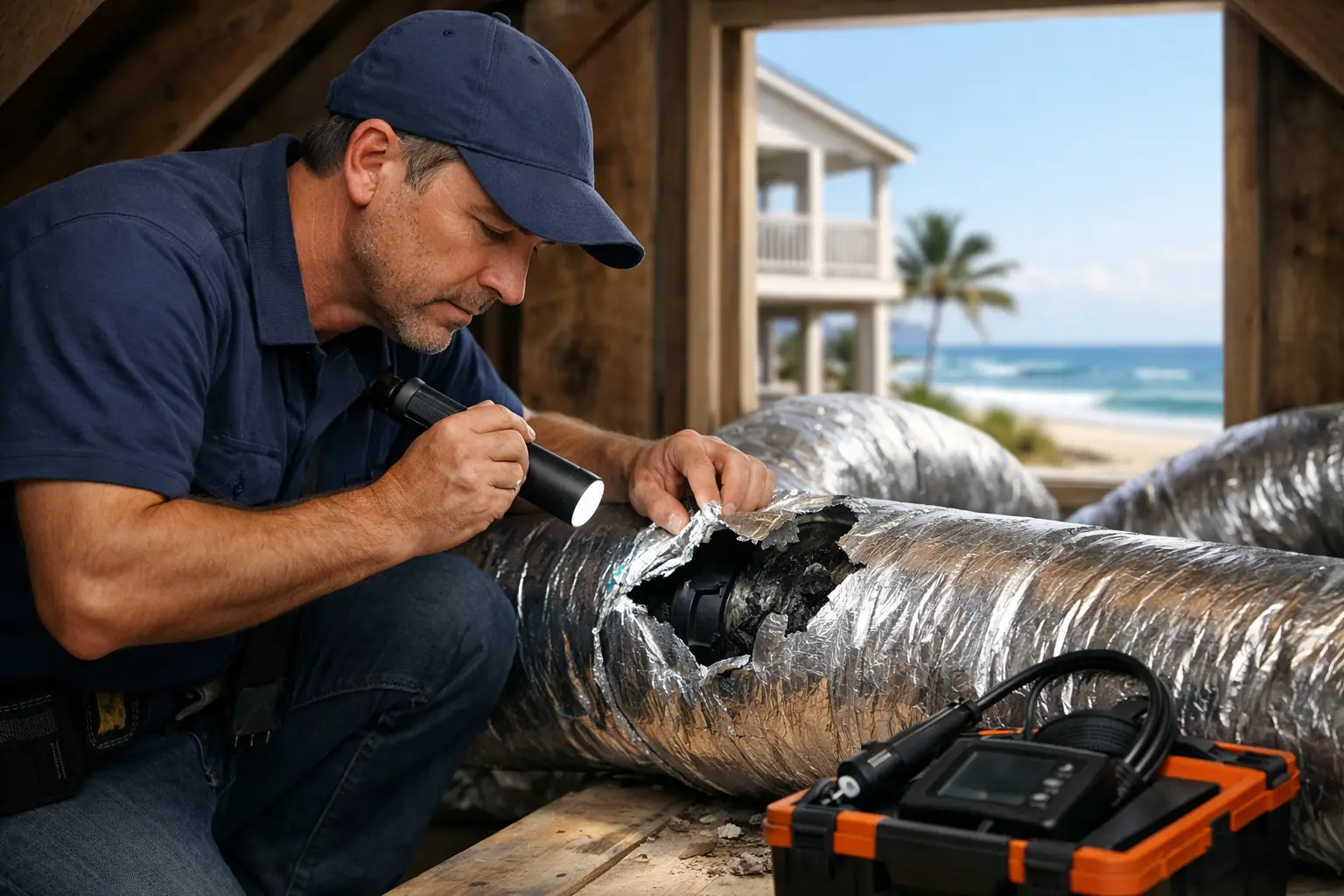
Your air conditioner may still blow cold air while a serious problem sits hidden above the ceiling, behind a soffit, or below the floor. A ductwork damage inspection shows what cannot be confirmed by looking at a register: disconnected joints, crushed flex duct, water damage, construction debris, pest contamination, and openings that pull dirty air into the system.
For homes and condos in Puerto Peñasco, ductwork takes a beating. Fine desert dust, coastal humidity, wind-driven debris, long vacancy periods, remodel work, and pests can all affect a system that is mostly out of sight. Waiting until the AC stops working is expensive. By then, an airflow restriction, duct leak, or contamination problem may already be forcing the equipment to work harder than it should.
Why hidden duct damage deserves a real inspection
Ducts are not just tubes that carry cooled air. They are part of the air-conditioning system that protects comfort, indoor air quality, and equipment life. If a duct run is torn, detached, kinked, or wet, cooled air may be escaping into an attic, wall cavity, or ceiling space instead of reaching the room where you need it.
The system can also pull unconditioned air, dust, insulation fibers, odors, or moisture into the return side. That means a new filter alone may not solve the problem. You may notice dust collecting quickly after cleaning, uneven room temperatures, a musty smell when the system starts, or an AC unit that runs longer than it used to.
A visual, camera-based inspection replaces guessing with evidence. Instead of being told that a duct "might" be damaged, you can see the condition inside the run and understand where the issue is located. That matters when damage is inaccessible and a contractor needs a precise repair path.
Signs you may need a ductwork damage inspection
Some duct problems announce themselves with a loud rattle or a room that never cools. Others are quieter. Pay attention when a condition repeats even after basic maintenance has been done.
Four warning signs are especially common:
- One or more rooms have weak airflow or stay noticeably warmer than the rest of the home.
- Dust returns to furniture and floors shortly after cleaning, even with regularly changed filters.
- The AC produces musty, foul, stale, or pest-like odors when it turns on.
- A remodel, roof repair, water intrusion, pest issue, or long period of vacancy occurred recently.
Higher utility bills can also be a clue, although they do not prove duct damage by themselves. In Puerto Peñasco heat, equipment naturally works hard. The question is whether the system is working hard because of outdoor conditions or because cooled air is being lost before it reaches your living space.
What a camera inspection can find
A proper duct inspection is not a quick look through a vent cover. The technician uses specialized camera equipment to examine concealed areas and document what is present. This is particularly useful in condos and finished homes where opening walls or ceilings without a confirmed location creates unnecessary expense.
Disconnected, torn, or crushed duct runs
Flexible duct can be punctured, compressed, stretched improperly, or disconnected at a collar or junction. A crushed section reduces airflow much like a kinked garden hose reduces water flow. A disconnected section can waste a large amount of conditioned air while drawing attic or cavity air into the home.
Not every damaged duct can be repaired from the register opening. When access is limited, the inspection should identify the location and type of defect clearly enough for the appropriate repair professional to reach it with the least disruption possible.
Dust, construction residue, and foreign material
New construction and remodeling often leave behind drywall dust, sawdust, insulation fragments, packaging material, screws, and other debris. These materials can settle inside ducts before registers are installed or while work is being performed. Once the system starts running, fine particles can move through the home and load filters faster.
Dust alone does not always mean the ducts are damaged. But heavy buildup, loose debris, or a blockage can restrict airflow and create a continuing cleanliness problem. Camera findings help determine whether targeted cleaning is appropriate or whether a mechanical issue must be repaired first.
Moisture, mold concerns, and odor sources
Humidity and cooling equipment can create conditions where moisture becomes a concern. A wet duct liner, condensation around poorly insulated ductwork, or water intrusion from a roof or plumbing issue can leave staining, residue, or microbial growth. Black-looking material should be treated seriously, but color alone does not identify the exact substance.
The practical step is to locate the moisture source, document the affected area, and determine whether the material can be cleaned or whether damaged duct material needs replacement. Cleaning without correcting the source of moisture can lead to the same problem returning.
Pest entry and contamination
Rodents, insects, and other pests can enter or damage ductwork through gaps, tears, disconnected sections, or unprotected openings. Their nesting material and waste can create odors and contamination that circulate when the HVAC system operates. A vent cleaning will not correct an open duct run or an entry point farther inside the system.
Inspection helps separate a surface vent issue from a concealed contamination or access problem. That distinction protects the home and prevents money from being spent on a partial solution.
Inspection first, then the right repair or cleaning plan
There is a trade-off in every ductwork project. Cleaning is valuable when dust, debris, odor-causing material, or accessible contamination is the main issue. Repair is the priority when a duct is disconnected, collapsed, wet, torn, or otherwise unable to move air properly. In some homes, both services are needed.
A practical inspection-first process avoids cleaning damaged ductwork without addressing the reason it became dirty. It also avoids recommending major duct replacement when a localized repair may solve the problem. The right recommendation depends on the material, age, access, extent of damage, and whether there is evidence of ongoing moisture or pests.
Clean It 4U Mexico uses camera-led findings to show property owners what is inside the ductwork before recommending next steps. When an area can be safely cleaned, HEPA-filtered equipment helps remove accumulated material rather than simply stirring it up. When a hidden defect cannot be reached directly, documented findings can help guide the contractor responsible for repair access.
When to schedule an inspection
A ductwork inspection makes sense before a small concern turns into a larger HVAC or indoor-air problem. It is especially useful after purchasing a home or condo, completing renovations, discovering a roof or plumbing leak, or reopening a vacation property that has been closed for months.
It is also a smart step when you are preparing a property for guests, renters, or a sale. A clean-looking home can still have dirty or damaged ductwork hidden above the ceiling. Photos and video from an inspection give owners a clearer record of condition than assumptions based on a visible register alone.
Continue changing HVAC filters on schedule, keep supply and return vents clear of furniture, and investigate new odors or airflow changes promptly. If the system is telling you something has changed, a camera inspection can show you where to look before a hidden duct problem costs more to correct.