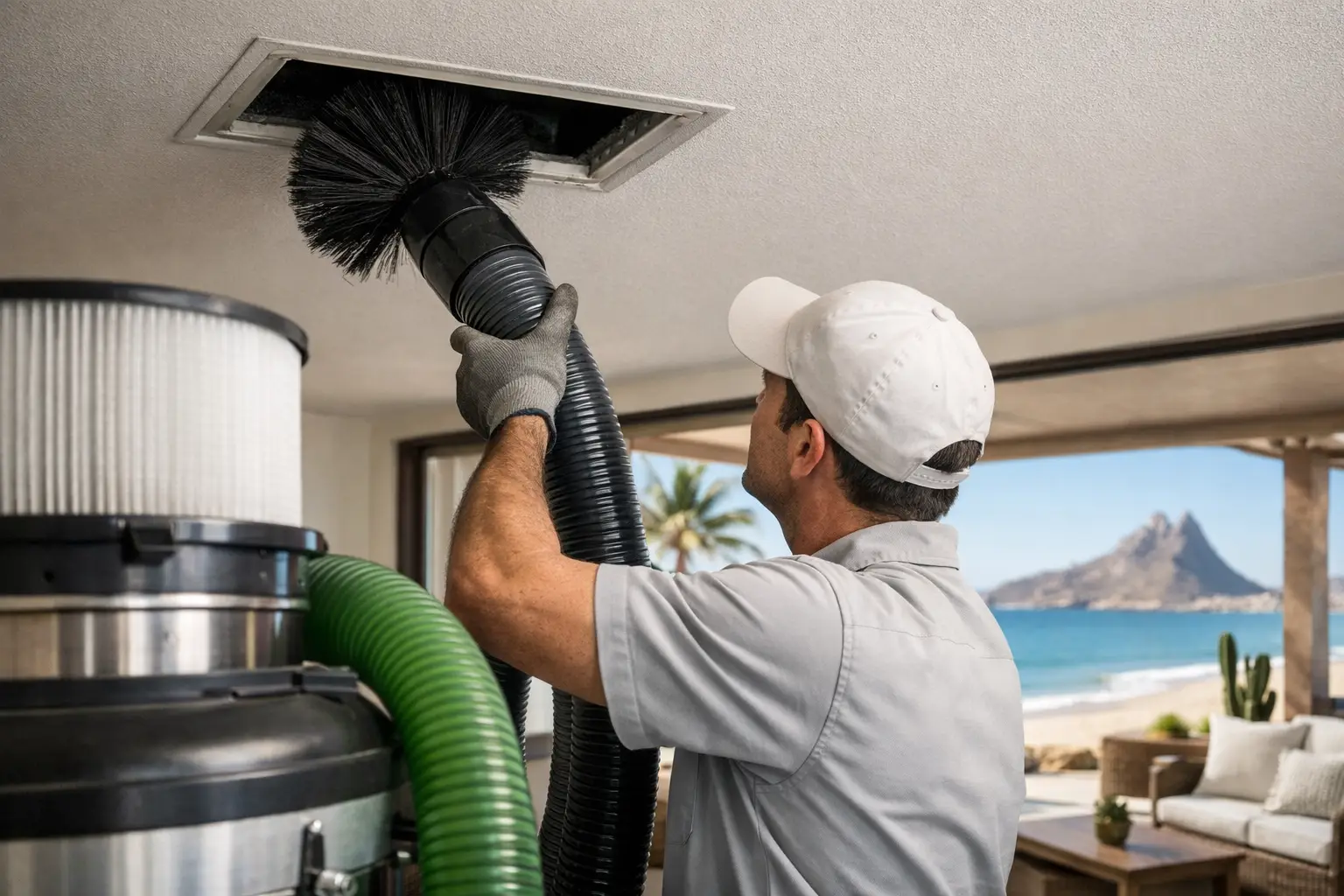
A clean register cover can hide a duct full of construction dust, pest debris, fine sand, or mold-related buildup. In Puerto Peñasco, wind, coastal humidity, remodeling activity, and long periods with a home closed up can all affect what is moving through your HVAC system. HEPA air duct cleaning is designed to remove that material instead of simply stirring it up and sending it back into the house.
For homeowners and condo owners, the concern is not just whether a vent looks dirty. It is whether the air conditioner is pulling through restricted, contaminated, or damaged ductwork that you cannot see. A proper cleaning starts by finding the condition inside the system, then removing what is there and identifying problems that cleaning alone will not fix.
What HEPA Air Duct Cleaning Actually Does
HEPA refers to high-efficiency particulate air filtration. In duct cleaning, the filter is part of the containment process. The cleaning equipment creates controlled suction while debris is loosened from duct surfaces, vents, and accessible system components. Fine dust and particles are captured in the equipment rather than blown into the living area.
That matters when a duct system contains the kind of material common in coastal properties: windblown dust, drywall powder, sawdust, insulation fragments, hair, lint, insect debris, and residue from prior occupants. Standard household vacuums are not built for this work. Professional HEPA-filtered equipment used for duct cleaning can provide far more suction and filtration capacity, helping remove debris from areas a homeowner cannot reach through a register opening.
HEPA filtration is not a shortcut or a cure-all. It will not repair crushed flex duct, seal an open duct connection, stop roof or wall leaks, or solve a moisture problem feeding microbial growth. Those conditions need to be identified first, because cleaning a duct that is still taking on water, dust, or outside air only delivers a temporary result.
Start With What Is Hidden
The right question is not, "Do I need duct cleaning?" It is, "What is actually inside my ducts, and why is it there?" Camera-based inspection provides a direct answer. It can show heavy dust layers, renovation debris, disconnected ductwork, damaged insulation, standing moisture, pest activity, or areas that cannot be reached from normal access points.
This visual step protects the property owner from vague claims. If a contractor says the ducts are dirty, ask what they found, where it was found, and whether there are photos or video. An inspection can also separate a duct problem from other causes of poor indoor air quality, such as a dirty evaporator coil, a neglected air filter, a drain issue, or an odor source outside the HVAC system.
For a recently purchased home, an inspection is especially useful. You may not know whether the property sat vacant, had pets, experienced water intrusion, or went through a remodel without the registers being protected. In condos, shared building conditions and inaccessible chases can make a clear inspection record even more valuable when repairs require coordination.
Signs Your Ducts Need Attention
Dust on furniture does not automatically mean the ducts need a full cleaning. Puerto Peñasco homes can collect dust quickly, particularly during windy conditions. But recurring symptoms, especially when they appear together, deserve a closer look.
Consider an inspection when you notice:
- Musty, stale, foul, or burning odors when the air conditioner starts
- Dark material, heavy dust, or debris visible behind registers
- Reduced airflow in rooms that used to cool normally
- Dust returning quickly after normal housekeeping and filter changes
- Evidence of insects, rodents, nesting material, or droppings near vents
- A recent renovation, drywall project, roof repair, or construction cleanup
- Water damage, a known leak, or suspected mold in or near the HVAC system
Odor is one of the most common reasons owners call. An odor can come from duct buildup, but it can also come from moisture at the coil, a clogged drain, contaminated insulation, an animal issue, or deteriorated materials. That is why an inspection-first approach is more useful than spraying fragrance into the vents. Fragrance may cover a smell for a few hours. It does not remove the source.
Mold Concerns Require More Than Surface Cleaning
When people see dark staining around a vent or smell a persistent musty odor, they often worry about black mold. That concern should be taken seriously, but it should also be handled carefully. Color alone does not identify a specific mold type, and not every dark mark is active mold growth.
What matters is whether moisture is present and whether contamination is visible inside the duct system or around HVAC components. If conditions support growth, the job includes removing affected debris where accessible and finding the moisture source. That may involve a condensate drainage issue, poor insulation, a leak, humid outside air entering through damaged ductwork, or another building condition.
A clean duct will not stay clean if moisture continues. Any remediation plan should include practical next steps for repair, drying, sealing, or HVAC service when those conditions are found. Homeowners deserve that information before spending money on cleaning alone.
What a Thorough Cleaning Should Include
A legitimate duct-cleaning project is more than vacuuming a few register openings. The scope depends on the home, the duct design, the level of contamination, and access limitations. In many properties, the work includes inspection of supply and return ducts, removal and cleaning of accessible vent covers, controlled debris removal, and photo documentation of significant findings.
The technician should protect the home while working and use equipment that captures loosened debris. If an inaccessible section of duct is torn, disconnected, or blocked, the service should identify the location as precisely as possible so the appropriate repair professional can access it. Guessing behind finished walls or ceilings can create unnecessary damage and expense.
Be cautious with low-price offers that promise to clean every duct in a home without asking about system size, number of vents, contamination, or access. A simple system with light dust is not the same as a renovated home with drywall debris or a vacation property with odor and moisture concerns. The price and process should reflect the actual condition found.
Protect Your Air Conditioner After Cleaning
Duct cleaning can remove accumulated debris, but ongoing maintenance keeps the system from loading up again. Change filters on a schedule appropriate for your use, occupancy, pets, and local dust conditions. For many homes, checking the filter monthly is sensible, especially during heavy A/C use. A filter that looks overloaded should be changed rather than left in place until a calendar date.
Keep registers clear of furniture and avoid blocking return-air grilles. If rooms have weak airflow, do not assume a larger filter or stronger thermostat setting will solve it. The cause may be a damaged duct, disconnected run, restricted return, dirty equipment component, or poor balancing.
After remodeling, ask contractors to protect registers and return openings before sanding, cutting drywall, or generating heavy dust. If that did not happen, schedule an inspection before the system circulates construction residue through the home for another season.
When to Schedule an Inspection
The best time to inspect is before a small problem becomes an HVAC repair or a property-wide odor complaint. Schedule service after purchasing a home, completing renovations, discovering pest contamination, experiencing a leak, or noticing persistent dust and odors. Vacation-property owners should also consider an inspection when reopening a home that has been closed for months.
Clean It 4U Mexico uses camera-led inspection and HEPA-filtered cleaning to show owners what is inside their ductwork and what needs to happen next. If the ducts are clean, that is useful information. If contamination, damage, or moisture is present, you can make decisions based on visible evidence instead of assumptions.
Your HVAC system moves air through every occupied room. When something hidden inside it is affecting comfort, cleanliness, or equipment performance, getting a clear look is the practical first step.