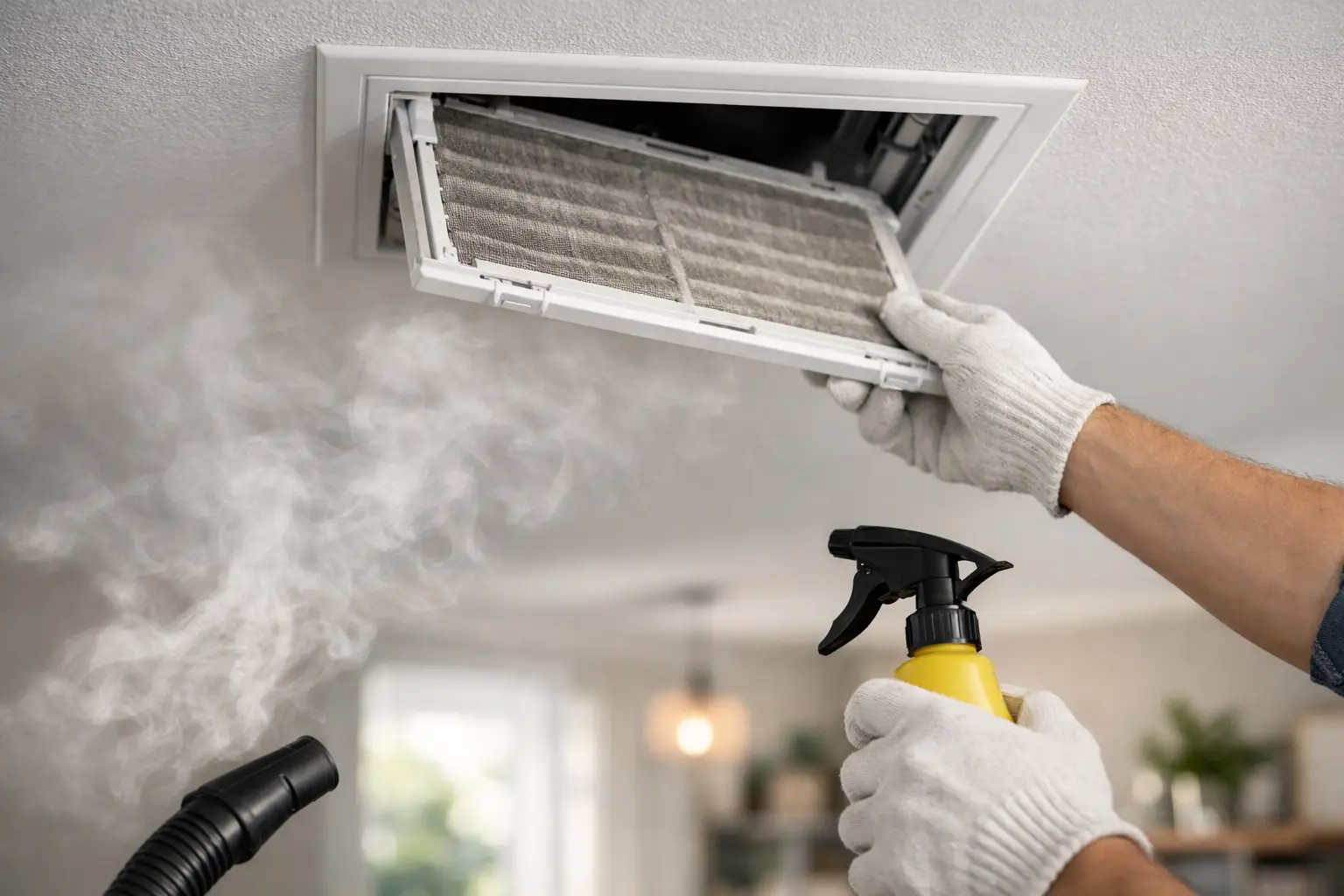
A musty smell that starts when the air conditioner turns on is not just an annoyance you should cover with a candle or room spray. In Puerto Peñasco, heat, coastal humidity, windblown dust, and vacant periods in second homes can create the right conditions for odors to develop inside an HVAC system. Knowing how to remove musty vent odors starts with finding the source of the odor, not masking what is coming out of the registers.
A clean-looking vent cover does not prove the duct behind it is clean. Odors can come from a dirty evaporator coil, a clogged drain line, moisture in ductwork, mold growth, pest contamination, construction debris, or dust that has absorbed humidity over time. The right fix depends on what a camera inspection and a hands-on system check reveal.
Why Your Air Vents Smell Musty
Musty odors are usually a moisture warning. Air conditioning removes humidity from indoor air, and that moisture must drain away correctly. When it does not, organic material such as dust, insulation fibers, pet dander, or debris can stay damp long enough to support mold or mildew growth.
The evaporator coil inside the air handler is a common odor source. It is cold while the system runs, so condensation forms on it normally. If the coil is coated with dust, the condensate pan is dirty, or the drain is partially blocked, that damp buildup can produce a sour or musty smell that travels through every connected vent.
Ductwork can also hold the problem. In homes and condos near the coast, duct sections may have gaps, loose connections, damaged insulation, or areas that pull warm, humid air from attics, crawlspaces, wall cavities, or other unconditioned spaces. A return-air leak can draw in dust, odors, and moisture, then distribute them throughout the home.
The timing of the odor gives useful clues. If it is strongest when the AC first starts after sitting unused, moisture or buildup around the coil and drain system may be involved. If one room smells worse than the rest, investigate that register, the duct branch serving it, and nearby signs of a leak or water intrusion. If the odor appeared after remodeling, construction dust, drywall debris, and materials left in the ducts may be part of the issue.
How to Remove Musty Vent Odors Safely
Start with the simple checks that do not disturb possible contamination. Turn off the HVAC system before removing a register cover or checking the filter. A heavily loaded filter reduces airflow and can allow more dirt to settle on the coil and inside the system. Replace disposable filters on the schedule recommended for your home, usually more often during heavy use, dusty conditions, renovations, or periods when pets are present.
Next, look for visible moisture around the indoor air handler. Check beneath the unit, around the condensate drain pan, and near the drain line outlet. Standing water, staining, rust, algae-like buildup, or a drain that is not flowing are reasons to call for HVAC service. Do not pour harsh chemicals into a drain line unless your equipment professional has told you it is appropriate for that system. Some products can damage components or create fumes without solving the blockage.
Remove and wash vent covers if they have visible dust or surface residue. Use mild soap and water, let the covers dry fully, and clean the surrounding wall or ceiling area. This improves the appearance of the register, but it will not remove odors that are deeper in the duct system. Avoid spraying fragrances, disinfectants, or bleach into vents. Those products can leave residue, add chemical odors, and may spread through the home when the system starts.
If the smell remains after a clean filter and basic moisture check, the next step is inspection. A camera-based duct inspection can show whether the ducts contain accumulated dust, mold-like growth, construction material, pest debris, collapsed sections, or damage that cannot be seen from the register opening. It replaces guesswork with visual evidence.
Professional cleaning is appropriate when inspection shows contamination that ordinary household cleaning cannot reach. Proper duct cleaning uses contained, high-powered equipment with HEPA filtration to remove loose dust and debris from the system rather than simply pushing it farther down the line. The blower compartment, evaporator coil area, drain components, supply ducts, return ducts, and registers may all need attention depending on where the odor originates.
Do Not Ignore Signs of Mold or Water Damage
A musty odor does not automatically mean black mold, but it should not be dismissed. Mold needs moisture, and moisture inside or near an HVAC system can point to a drainage problem, a roof or plumbing leak, poorly insulated ductwork, or humid air entering through damaged connections.
Call for an inspection promptly if you notice persistent musty air along with visible spotting around vents, recurring condensation, water stains near ceilings or walls, black or green residue inside an accessible duct opening, or respiratory irritation that seems worse when the AC runs. People with allergies, asthma, compromised immune systems, or other respiratory concerns should be especially careful around suspected mold contamination.
Do not pull apart flexible ductwork or reach deep into ducts to scrub suspected growth. Flexible ducts can tear, become disconnected, or lose their interior lining. If an inaccessible section is damaged or contaminated beyond cleaning, a qualified inspection can identify the exact location so the appropriate repair professional can access and replace only what is necessary.
Common Fixes That Do Not Solve the Problem
Air fresheners can make a room smell better for an hour, but they do not remove damp debris, repair a drain line, or stop an air leak. Closing registers in unused rooms is also not a reliable odor solution. It can disrupt airflow and increase strain on the system, especially if the HVAC equipment was designed to serve the full home.
Vacuuming only the first few inches inside a vent is limited. A household vacuum does not have the reach, containment, or filtration needed to remove buildup throughout a residential duct system. It may help with loose dust at the opening, but it cannot confirm conditions deeper in the run.
Another mistake is assuming a recently purchased or remodeled home has clean ducts. New construction and renovation work often leave behind drywall dust, sawdust, insulation scraps, and other debris. A vacation property may also sit closed for months with limited airflow, giving humidity and trapped dust time to create stale or musty conditions.
Prevent Musty Vent Odors From Returning
Once the source is corrected, regular maintenance keeps the problem from building again. Change filters consistently, keep condensate drains maintained, and address water leaks before they reach insulation or ductwork. During long vacancies, have someone check the HVAC system for proper operation, humidity concerns, and unusual odors rather than waiting until arrival day.
After a major remodel, dust-producing repair, pest issue, or water event, schedule an inspection before relying on the system for daily comfort. This is particularly worthwhile for property buyers who cannot see the condition of concealed ducts during a standard walkthrough.
Clean It 4U Mexico approaches musty vent odors with inspection first. Camera findings can document what is actually inside the ducts and help determine whether targeted cleaning, mold-focused remediation, drain service, or duct repair is the practical next step. You should be able to see why a recommendation is being made.
If the odor is persistent, stronger when the AC runs, or accompanied by water staining or visible contamination, schedule an HVAC and duct inspection before the problem spreads through more of the system. A clean home should smell like nothing at all when the air turns on.