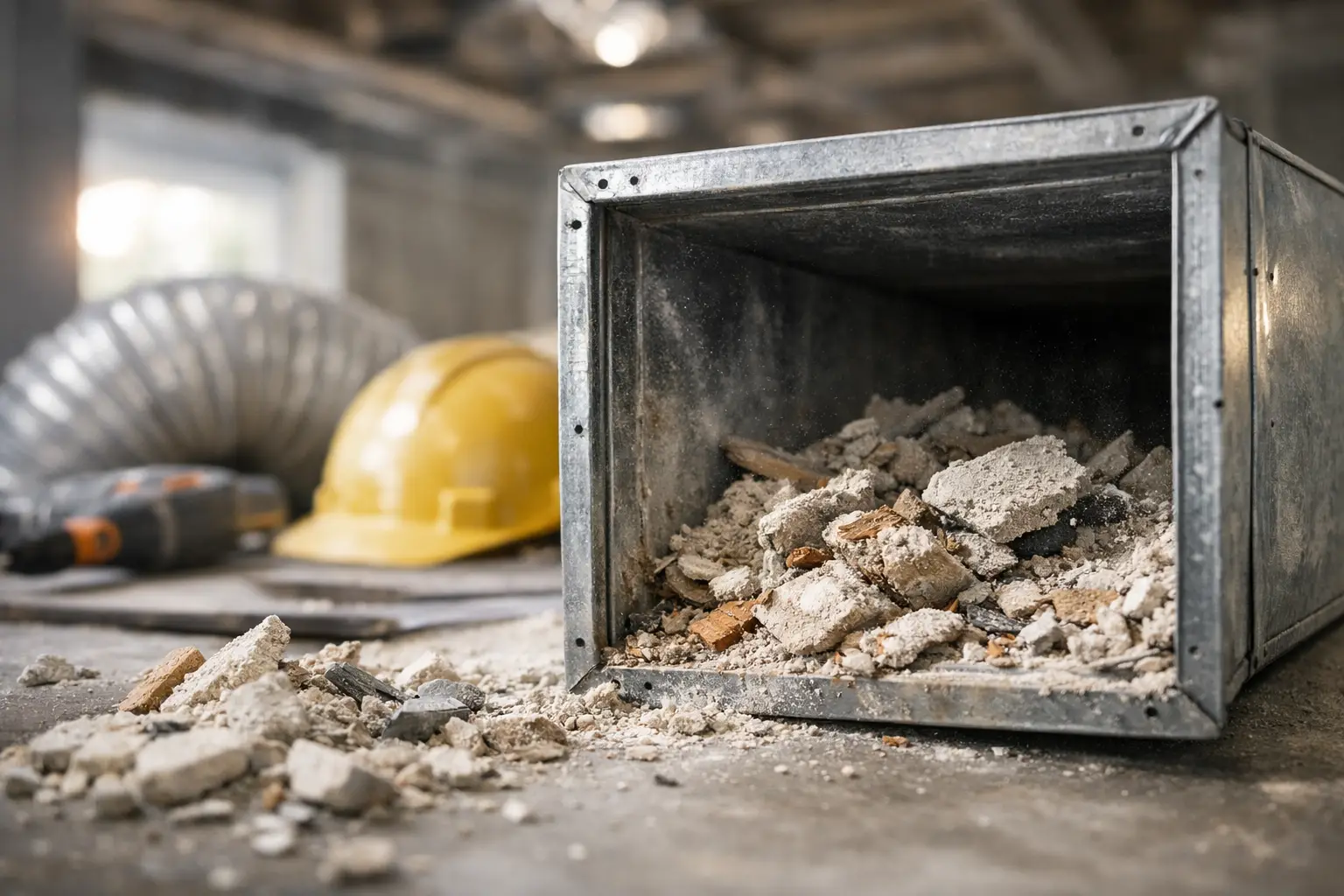
A newly built home, condo, or remodeled room can look spotless while construction debris in ductwork is still sitting behind the registers. Drywall dust, tile fragments, insulation, sawdust, screws, packaging, and loose material can be left in ducts during construction or renovation. Once the air conditioner starts running, that material does not stay hidden forever.
In Puerto Peñasco, air-conditioning systems work hard for much of the year. A duct system that begins with debris inside can deliver dust into living spaces, reduce airflow, and add unnecessary strain to equipment that is already battling heat, wind, humidity, and coastal conditions. The answer is not to guess or simply replace a filter. The first step is to see what is actually inside.
Why construction debris ends up in ductwork
Ducts are often installed before the finishing work begins. During the busy final stages of a build, open duct runs and floor registers can become convenient paths for dust and scraps. Workers may sweep debris toward openings without realizing it can enter the system. Registers may be removed during painting, flooring, drywall work, or repairs, leaving the duct opening exposed.
Remodeling creates the same risk, even in an otherwise well-maintained home. Cutting drywall, sanding joint compound, drilling into masonry, replacing ceilings, or opening walls near return-air grilles can release fine material that is easily pulled into the HVAC system. Return ducts are especially vulnerable because they pull air toward the equipment whenever the system runs.
Not every post-construction dust problem means the ducts are full of debris. Dust can settle on furniture and vents from work performed inside the home. But when dust returns quickly after cleaning, airflow has changed, or debris is visible behind a register, an inspection is justified.
What debris can do to your HVAC system
Large pieces of material can partially block a duct branch or collect at a bend, reducing the air reaching a bedroom, bathroom, or living area. Homeowners may notice that one room never cools properly while other areas feel normal. The problem is sometimes blamed on the AC unit when the restriction is farther down the line.
Fine construction dust creates a different problem. Drywall compound, concrete dust, and sawdust can coat duct surfaces and move through the system over time. Filters catch some particles, but a standard household filter is not designed to correct a duct system loaded with job-site residue. If the filter becomes clogged quickly, airflow to the equipment can drop, which may contribute to freezing, longer run times, and higher operating costs.
Debris also gives other contamination something to cling to. In a humid coastal environment, dust buildup can hold moisture and support musty odors. If there is a condensation issue, water intrusion, or an existing mold concern, construction material inside the ductwork makes the system harder to clean and evaluate properly.
Sharp scraps, fasteners, or displaced insulation can create mechanical concerns as well. Flexible ducts can be crushed, torn, disconnected, or punctured during renovation work. Cleaning alone will not solve a damaged or collapsed duct. That is why visual inspection matters before anyone promises a simple fix.
Signs you may have construction debris in ductwork
Some warning signs are obvious, such as chunks of drywall, insulation, or wood visible below a register. Others are less direct. Pay attention if a home has recently been built, purchased, renovated, or left vacant while work was being done and you notice any of the following:
- Dust blowing or collecting around supply vents soon after the home is cleaned
- A room with weak airflow or noticeably uneven cooling
- A new musty, dusty, or foul odor when the AC turns on
- Filters becoming dirty much faster than expected
- Small debris falling from registers or found inside return grilles
- Allergy-like irritation, coughing, or eye discomfort that seems worse when the system runs
These symptoms can have more than one cause. A dirty coil, damaged duct, pest activity, moisture issue, or poorly sealed return can produce similar complaints. That is exactly why a camera inspection is more useful than a vague recommendation to clean every duct.
A camera inspection shows the real condition
Ductwork is concealed behind ceilings, walls, and soffits. Removing large sections of a finished home just to look for a problem is expensive and disruptive. A camera-based inspection allows the interior condition of accessible duct runs to be documented without unnecessary demolition.
The goal is to identify what is present, where it is located, and whether the duct itself is intact. Clear visual findings can distinguish loose dust from construction waste, reveal a blockage at a bend, show a disconnected section, or document material that may require a contractor to access the area. Property owners should ask for visual evidence, particularly after a remodel or when buying a home that may have hidden construction shortcuts.
This approach also prevents over-cleaning. If only one branch contains debris, targeted work may be appropriate. If contamination is widespread, the full system may need attention. If the camera shows torn flex duct, standing water, heavy mold growth, or an inaccessible collapse, the next step may be repair coordination rather than forcing cleaning equipment into damaged material.
Proper removal is more than vacuuming a vent
Removing a register and vacuuming the first few inches of duct may improve its appearance, but it does not confirm that deeper debris is gone. Construction residue often settles beyond the visible opening, especially at turns and low points. Disturbing it without proper collection can send more dust into the home or toward the air handler.
A professional cleaning process should be matched to the material found and the condition of the duct. HEPA-filtered equipment helps capture fine dust instead of recirculating it into indoor air. Registers and vents should also be cleaned because they are the last surfaces air passes before entering the room. The air handler, filter area, and return side deserve attention when dust has been pulled through the system.
There are limits. Wet material, hardened concrete, loose fiberglass, damaged insulation lining, and duct sections that have separated may require repair or replacement. A responsible service provider should explain that clearly, document the issue, and identify the repair path rather than treating every problem as a routine cleaning job.
What homeowners can do after construction or remodeling
Before running the AC heavily after a project, check that all registers and return grilles are installed and clear. Look for visible scraps, but do not push objects deep into the ducts or use sharp tools that can tear flexible ductwork. Replace the HVAC filter if construction dust has been present, even if the filter was changed recently.
Ask the contractor whether registers were covered during work and whether the HVAC system was operated during sanding, cutting, or demolition. That conversation is worth having before final payment, especially if the project involved drywall, ceilings, flooring, or wall demolition.
If dust is persistent or airflow is uneven, schedule an inspection rather than waiting for the system to struggle through another hot season. For vacation properties, arrange the inspection before arrival when possible. That gives you time to address contamination or damage without losing valuable time in the home.
Clean It 4U Mexico uses camera-based inspection to show property owners what is inside their ductwork, then recommends cleaning, remediation, or repair identification based on what the system actually needs. Photos and findings make it easier to make a repair decision from the United States or while coordinating local contractors.
Do not let a finished project hide an unfinished HVAC problem
A fresh remodel should improve your home, not leave a hidden source of dust, odors, poor airflow, and equipment strain behind the walls. If you suspect debris entered the system, schedule a duct inspection while the construction details are still recent and before small material becomes a long-term HVAC problem.