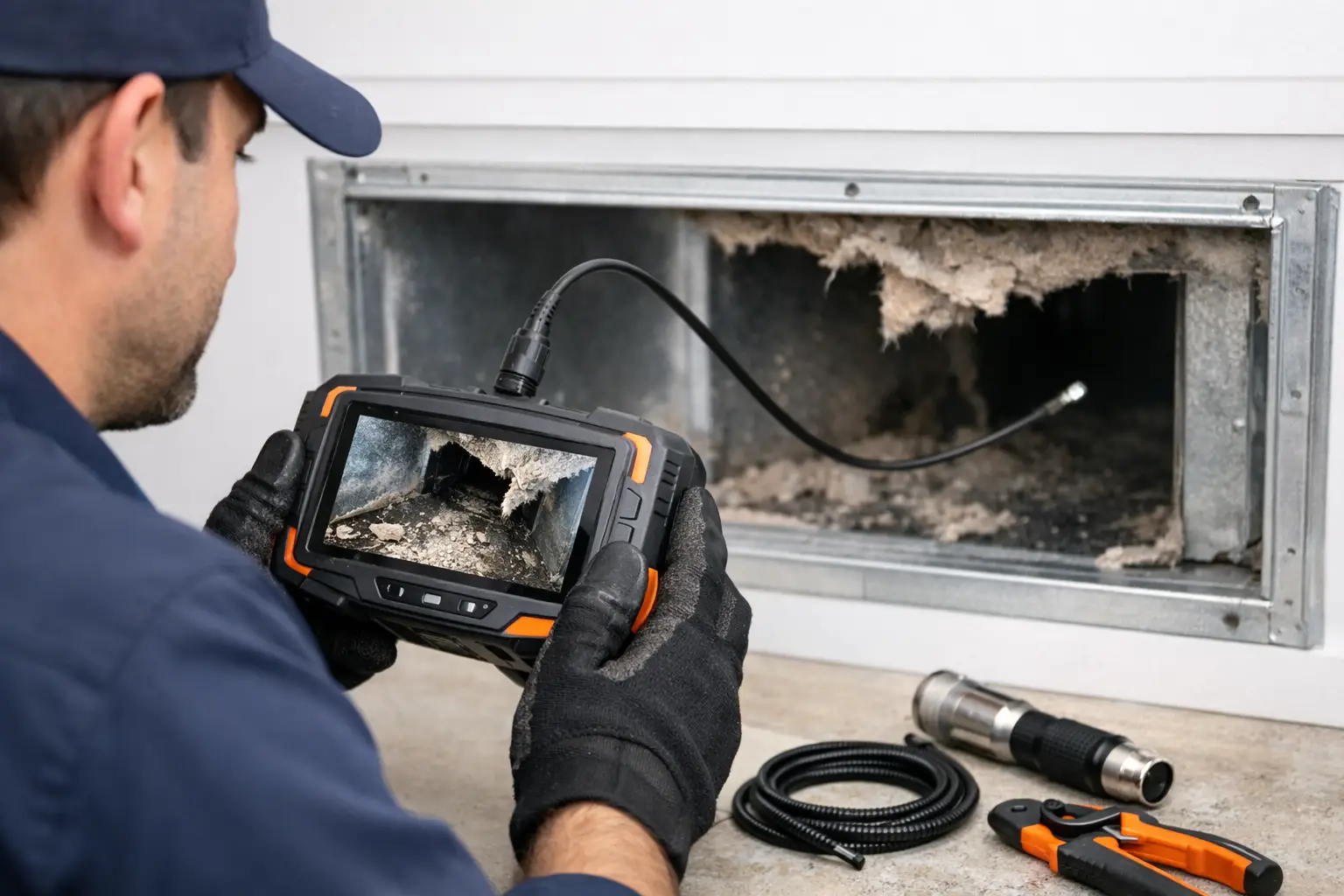
A home in Puerto Peñasco can look spotless while its ductwork tells a different story. Fine desert dust, moisture, renovation debris, pest activity, and years of buildup can collect where you cannot see it. An HVAC camera inspection service puts a clear view inside those concealed ducts, so you do not have to guess whether an odor, airflow problem, or dirty vent is a minor issue or a condition that needs attention.
For homeowners, condo owners, and people purchasing a vacation property, that proof matters. Your air-conditioning system works hard in coastal heat. If airflow is restricted or contamination is circulating through the home, comfort suffers and expensive equipment may work harder than it should.
Why Looking Inside the Ducts Matters
Registers and return grilles only show the first few inches of your HVAC system. A vent can appear clean at the surface while deeper sections hold construction dust, loose insulation, insect remains, damaged flex duct, or material that has shifted out of place.
Camera inspection is especially useful when the problem is hidden or inconsistent. You may notice a musty smell only when the AC starts, dust collecting quickly after cleaning, one room that never cools properly, or debris blowing from a vent. Those symptoms point to a need for inspection, but they do not identify the cause by themselves.
A camera allows the technician to follow the duct path and document what is actually present. Instead of hearing that your ducts are "probably dirty," you can see the buildup, separation, blockage, or damage that supports the recommendation. That is the practical difference between inspection-first service and a vague sales pitch.
What an HVAC Camera Inspection Service Can Find
Every home is different, and not every inspection reveals a major problem. In some homes, the ducts are in good condition and only need routine vent cleaning or filter maintenance. In others, the camera finds conditions that should be addressed before they affect indoor air quality, HVAC performance, or the building itself.
Dust, sand, and construction debris
Puerto Peñasco's wind and dust create a constant challenge, particularly in homes that sit vacant for part of the year. Openings around registers, poor filtration, and normal use can allow fine dust to settle inside the system. A recent remodel can make the problem worse. Drywall powder, sawdust, paint residue, and pieces of construction material may enter ducts when registers are left uncovered.
This material can restrict airflow, collect at turns in the ductwork, and return to living spaces. If a home was recently built, remodeled, or purchased after sitting empty, a camera inspection can show whether cleaning is needed before the system is put under heavy use.
Signs of moisture and mold-related contamination
Musty odors should not be ignored simply because they come and go. Condensation, coastal humidity, drainage issues, or past water intrusion can create conditions that support mold growth in or around duct components. A camera cannot replace laboratory testing when testing is required, but it can identify visible staining, moisture-related residue, and areas that need closer attention.
Black-looking material is not automatically black mold, and responsible service should not make that claim without proper confirmation. What matters is finding the source, removing contamination where appropriate, correcting moisture conditions, and preventing the problem from returning.
Damage that affects airflow
Ductwork can be crushed, disconnected, torn, sagging, or poorly sealed behind ceilings and walls. These issues waste cooled air and can pull dust, attic air, or wall-cavity contaminants into the system. A room that stays warm while the rest of the home is comfortable may have a duct problem rather than an AC unit problem.
Camera documentation helps pinpoint the location of inaccessible damage. If direct repair is not possible through an existing vent opening, the findings can give an HVAC or remodeling contractor a clearer repair path. That can reduce unnecessary cutting and prevent a contractor from searching blindly behind finished surfaces.
Pest contamination and unexpected obstructions
Insects, rodents, nesting material, and other pest-related contamination can enter or remain in ductwork. So can loose insulation, broken register pieces, and objects dropped through floor vents. These conditions may create foul odors, reduced airflow, or health concerns, particularly for people with allergies or respiratory sensitivity.
The right response depends on what is found. Cleaning alone may not solve an active pest-entry problem. The opening must also be identified and sealed, and damaged ducts may need repair or replacement.
When to Schedule a Camera Inspection
An HVAC camera inspection is not something every home needs on a fixed calendar schedule. It makes the most sense when there is a reason to investigate. A visual inspection is worth scheduling after a property purchase, before moving into a home that has been closed for months, or following construction and remodeling work.
It is also appropriate when you smell mildew or a foul odor during AC operation, see dust blowing from vents, find repeated dust buildup around registers, or notice reduced airflow in certain rooms. If filters load up unusually fast, the system has had a pest issue, or there has been water damage, looking inside the ducts can provide useful answers.
For vacation-property owners, an inspection can be a practical part of preparing a home for the season. It gives you documentation of the system's condition rather than relying on what is visible from the living room.
What Happens During the Inspection
The process begins with access points such as supply vents, return vents, and registers. A technician feeds a specialized camera into reachable sections of the duct system and reviews the video for dust accumulation, contamination, loose connections, deterioration, and obstructions.
Not every inch of every duct can always be reached. Tight turns, small ducts, and inaccessible sections can limit camera travel. That is why an honest inspection explains what was visible, what could not be verified, and what the next step should be. A camera is a diagnostic tool, not magic.
When cleaning is recommended, it should be based on what the inspection shows. Proper removal matters more than simply stirring debris loose. Clean It 4U Mexico uses HEPA-filtered equipment designed to pull contaminants out of the system while cleaning duct interiors, vents, and registers. If damage is found behind a wall or ceiling, the inspection findings can help coordinate a targeted repair instead of unnecessary demolition.
How to Use the Findings to Protect Your Home
Photos and video should lead to clear choices. Light dust may call for a cleaning plan and better filter habits. Heavy construction debris may require more thorough duct cleaning before regular AC use. Visible duct damage can require repair, while signs of moisture should trigger investigation of the water source as well as cleaning.
Do not overlook the simple maintenance that supports the work. Replace filters on schedule, using the filter type recommended for your system. In dusty conditions or when the home is occupied frequently, filters may need attention more often. Keep supply and return vents unobstructed, and pay attention when a new odor or airflow change appears rather than waiting for the AC to fail.
The goal is not to assume the worst inside every duct. It is to replace uncertainty with visible evidence, then take the right action for your home. If your vents are producing dust, odors, or uneven comfort, schedule an inspection before a hidden duct problem becomes a larger cleaning or repair project.