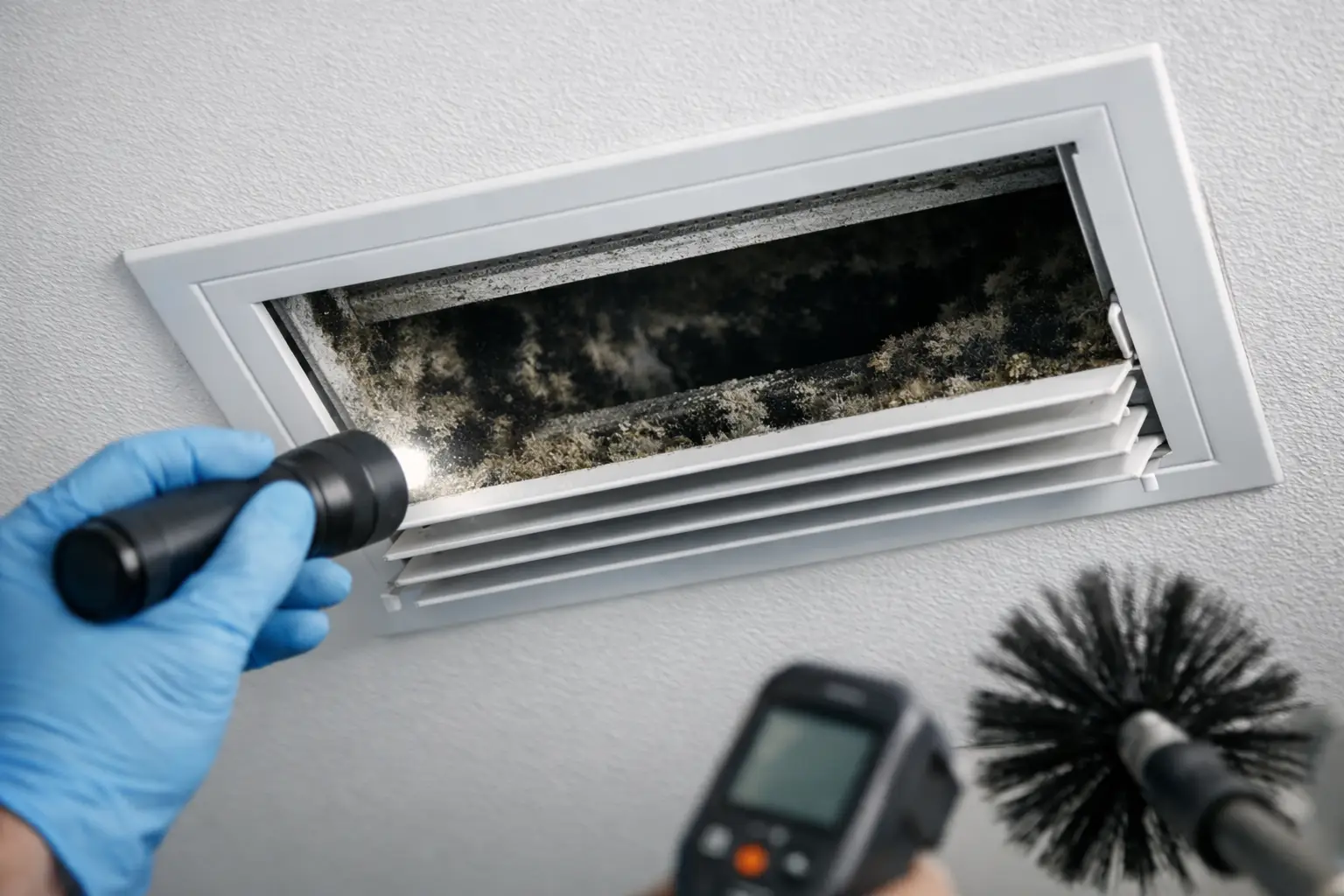
A dark patch around a register is easy to dismiss as ordinary dust. A musty smell that starts when the AC turns on is harder to ignore. When you suspect black mold in air vents, the real question is not whether you can wipe the visible area clean. It is whether moisture and contamination are present farther inside the HVAC system, where every cooling cycle can move particles and odors through the home.
For homeowners and condo owners in Puerto Peñasco, this concern deserves a direct response. Coastal humidity, windblown dust, vacation-home shutdowns, roof or plumbing leaks, and poorly drained AC components can create conditions that support mold growth. The visible vent may be the first warning, but it is rarely the whole story.
Black Mold in Air Vents Is Not a Surface-Cleaning Job
People use the term black mold for nearly any dark material around a vent. Some of it may be dirt, soot, insect residue, or a mix of dust and moisture. Color alone cannot identify a mold species or tell you how serious a condition is. Still, dark growth, recurring spots, or a strong mildew odor should be treated as a contamination concern until the ductwork and HVAC components have been inspected.
Cleaning only the register cover may improve the appearance for a few days. If the source is a wet duct liner, a condensate issue, a leak near the air handler, or accumulated debris holding moisture inside the system, the material can return. The AC fan then becomes a delivery system for odors and fine particles instead of clean, conditioned air.
A proper response starts with finding out what is actually inside. Camera-based inspection gives owners visual proof of duct conditions that cannot be seen from the room. It can reveal debris, moisture staining, damaged duct sections, pest contamination, loose insulation, and growth along interior surfaces. That evidence matters, especially for absentee owners, buyers evaluating a property, or anyone deciding whether cleaning alone is enough.
Warning Signs That Need an Inspection
Mold inside ductwork is hidden by design, so symptoms often show up before the source is visible. A persistent musty odor when the system starts is one of the most common clues. The odor may fade after the AC has run for a while, then return after the system sits idle.
Dark spotting on vent covers, ceiling areas around registers, or inside the first few inches of a vent opening also deserves attention. So does dust that returns unusually fast after cleaning, especially if it appears clumpy or sticks to the grille. In a humid home, that buildup may be holding moisture.
Watch for reduced airflow, rooms that remain damp, water stains near the air handler, and a drain pan that overflows or stays wet. These issues do not automatically mean mold is present, but they can create the conditions that allow it to grow. If residents experience eye, nose, throat, or respiratory irritation that seems worse while indoors, do not assume the HVAC system is the cause - but do not ignore a system that also has odors or visible contamination.
Vacation properties need special attention. A home closed up for weeks or months may have limited air circulation, humidity fluctuations, and an AC system that is not being checked regularly. A small water problem can become a larger duct and indoor-air problem before the owner returns.
Where the Moisture Comes From
Mold needs moisture. Removing visible growth without correcting the moisture source is a temporary fix. In residential HVAC systems, common sources include a clogged condensate drain, standing water in or near a drain pan, poorly insulated ducts that sweat, roof or plumbing leaks, and humid outdoor air entering through damaged or disconnected ductwork.
In Puerto Peñasco, dust adds another layer to the problem. Fine dust can settle inside returns and supply ducts, coat coils and registers, and hold moisture when humidity rises. Construction residue after remodeling can make this worse. Drywall dust, sawdust, insulation fibers, and other debris restrict clean airflow and give moisture something to collect around.
The repair path depends on the finding. A dirty but intact duct may be cleaned. A wet, crushed, disconnected, or inaccessible section may require a contractor to open an access point or replace the damaged run. That is why an inspection should come before broad promises that a quick cleaning will solve everything.
What a Thorough Mold-Focused Duct Service Looks Like
A responsible service process is not a fragrance treatment and it is not a household vacuum pushed into a vent. The work should begin with inspection of accessible registers, returns, the air handler area, and the duct interiors that can be viewed by camera. Photos or video help show what was found and support clear decisions about cleaning, remediation, or repair.
When cleaning is appropriate, the goal is physical removal of accumulated dust, debris, and contamination from the accessible HVAC path. HEPA-filtered equipment helps capture loosened material rather than allowing it to circulate back into the home. Registers and grilles should be cleaned as part of the job, but they are only one piece of the system.
If active moisture or damaged ductwork is found, that needs to be addressed too. Cleaning a duct that is still getting wet is like washing a floor under an active leak. The condition will return. A good inspection identifies the likely source and gives the owner a practical repair path, including when another trade needs to make an opening or correct a leak.
At Clean It 4U Mexico, the focus is on showing owners what is concealed inside the ductwork, removing what can be safely reached, and identifying damage that requires repair coordination. That approach avoids guessing and gives you something more useful than a vague recommendation.
What Not to Do When You See Dark Growth
Do not spray bleach, perfume, or heavy disinfectant into supply vents and assume the job is complete. Chemicals can create strong fumes, may not reach the contamination source, and do not correct trapped moisture or damaged materials. Avoid brushing aggressively inside flexible ductwork as well. Flexible ducts and interior liners can be damaged, which creates more places for dust and moisture to collect.
You can remove a register cover and gently clean the cover itself if you can do so safely. Turn the system off first, wear appropriate protection, and do not disturb material deeper in the duct. Take clear photos before cleaning. Those photos can help an inspector understand whether the issue is recurring, isolated, or connected to a larger pattern.
If there has been significant water intrusion, visible widespread growth, sewage contamination, or pest waste inside the system, do not run the HVAC system until the condition has been evaluated. Continued operation may spread odors and contaminants farther through the home.
Protecting Your HVAC System After Cleaning
Once contamination and moisture issues have been addressed, regular maintenance helps protect the investment. Replace filters on a schedule that matches your home, occupancy, pets, dust exposure, and filter type. In many dusty coastal homes, waiting until a filter looks completely packed is too long. A visibly loaded filter restricts airflow and increases the amount of material that can settle in the system.
Keep condensate drains and pans checked, particularly during periods of heavy AC use. Make sure return grilles are not blocked by furniture, storage, or heavy dust buildup. After remodeling, schedule an inspection instead of assuming the contractor's cleanup kept debris out of the ductwork.
For a newly purchased home or condo, an HVAC inspection is also a practical due-diligence step. Fresh paint and a clean floor can hide years of dust, moisture exposure, renovation debris, or duct damage. Knowing the condition before move-in lets you plan cleaning or repairs before the AC is running every day.
If a vent smells musty, shows recurring dark buildup, or blows dust into a room you just cleaned, treat it as a message from a system you cannot fully see. Schedule an inspection, ask for visual findings, and fix the moisture source along with the contamination. Clean air starts with knowing what is inside the ducts.