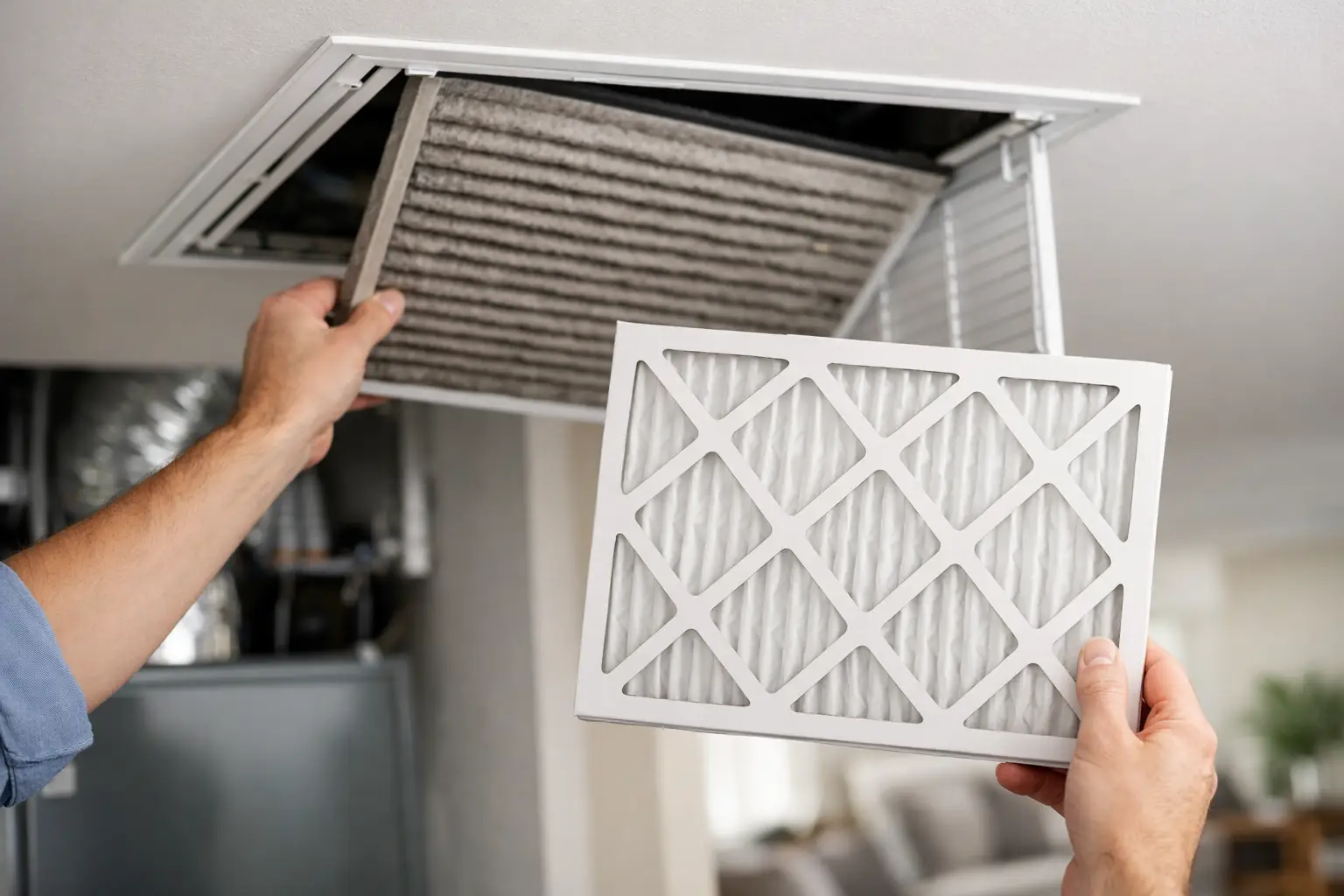
A coastal home can look clean on the surface while its HVAC filter is collecting sand, fine dust, pet hair, construction residue, and moisture-fed debris. If you are asking how often to replace an HVAC filter, the honest answer is: more often than the package schedule may suggest. In Puerto Peñasco, wind, dust, heat, humidity, and frequent air-conditioner use can load a filter quickly.
A neglected filter does not just look dirty. It restricts airflow, makes your equipment work harder, and allows more dust to settle around registers and inside the system. In a vacation home or condo that sits closed for long periods, a dirty filter can also combine with trapped humidity and create the musty odor owners notice when they return.
How Often to Replace an HVAC Filter in Puerto Peñasco
For most homes using a standard 1-inch disposable filter, check it every 30 days and expect to replace it every 30 to 60 days. A home with light use, no pets, and little dust exposure may get closer to 60 days. But if the AC runs daily through hot weather, 30 days is often the safer interval.
Thicker 4-inch or 5-inch media filters can sometimes last six to 12 months, but they should still be inspected monthly. A thicker filter has more surface area, not a free pass to ignore it. Dusty conditions, pets, remodeling, odors, or poor airflow can shorten its useful life dramatically.
The filter manufacturer may print a 90-day recommendation. Treat that as a starting point, not a guarantee. Your system does not know what the box says. It responds to the amount of debris moving through your home and the airflow it can pull through the filter.
Use Your Home's Conditions, Not Just the Calendar
A replacement schedule should reflect what is happening inside and around the property. The following guide is practical for many Puerto Peñasco homeowners and condo owners:
| Home condition | Suggested filter check and replacement | | --- | --- | | Part-time or lightly occupied home with low dust | Check monthly; replace every 60 to 90 days if still clean | | Full-time home with regular AC use | Check monthly; replace every 30 to 60 days | | Pets, smokers, allergies, or frequent open doors and windows | Check monthly; replacement may be needed every 30 days | | Home after remodeling, construction, or drywall work | Check every two weeks; replace as soon as dust is visible | | Musty odors, visible dust at registers, or reduced airflow | Replace the filter now and investigate the system |
A filter should be replaced before it becomes packed with gray dust and debris. Waiting until it is completely clogged is hard on the blower and can leave certain rooms warmer or less comfortable than others.
Why Dirty Filters Cause More Than Dust
Your HVAC system depends on airflow. When a filter becomes loaded, the blower has to pull air through a restriction. That can increase strain on the equipment, reduce cooling performance, and contribute to ice buildup on some systems when airflow is severely limited.
A dirty filter can also make a home feel dirtier even when you are cleaning regularly. Fine dust may collect at supply registers, furniture, and return grilles. You may see black or gray streaking around vents, especially where air movement carries particles against nearby ceilings or walls. That staining does not automatically mean mold, but it is a sign worth checking instead of painting over.
Filters also have limits. They capture airborne particles before those particles move deeper into the HVAC equipment, but they cannot remove contamination that is already sitting in ductwork. If a system has construction debris, pest material, moisture damage, black mold concerns, loose insulation, or damaged ducts, changing filters alone will not correct the underlying problem.
The Warning Signs That Call for Action
Do not wait for a calendar reminder if you notice a change in the way your system sounds, smells, or performs. A filter may need replacement, and the system may need a closer inspection, when you have persistent dust around registers, weak airflow from one or more vents, a musty or foul smell when the AC starts, or rooms that are not cooling evenly.
Other warning signs include a visibly bowed filter, a return grille coated in dust, an unusually high amount of dust after a recent renovation, or evidence of insects and rodents near vents. A filter is an affordable maintenance item. It should not be used to hide a bigger duct or contamination problem.
Choosing the Right Filter Without Choking Airflow
Many homeowners assume the highest MERV rating is always the best choice. It is not that simple. Higher-rated filters can capture smaller particles, but they may also create more airflow resistance if the system was not designed for them or if they are allowed to get too dirty.
For many residential systems, a quality filter in the MERV 8 to MERV 11 range is a reasonable balance between filtration and airflow. Homes with specific allergy concerns may need a higher rating, but that decision should account for the equipment, filter size, and the condition of the return system. A thin, high-restriction filter changed late can create more trouble than a properly sized filter changed on time.
Before buying replacements, confirm the exact dimensions printed on the old filter or filter rack. Nominal sizes and actual sizes are not always identical. A loose filter can allow unfiltered air and debris to bypass the frame, while an overly tight filter can bend or fail to seat correctly.
Replace the Filter Correctly
Changing a filter takes only a few minutes, but the details matter. Turn the system off before opening the filter compartment or return grille. Remove the old filter carefully so loose dust does not fall into the cabinet or living area.
Follow these four steps each time:
- Check the airflow arrow on the new filter and point it toward the air handler or furnace, not toward the room.
- Make sure the filter fits the slot without gaps, bending, or forcing the frame.
- Write the installation date on the filter frame so the next check is not a guess.
- Look at the return grille and nearby area for dust buildup, moisture marks, or odor concerns before closing it.
If the filter is unusually dirty after only a short period, do not simply replace it and forget it. The fast buildup may be normal during a dusty season, but it can also point to dirty ducts, an unsealed return, construction residue, or a system pulling air from an unwanted space.
Special Cases: Vacant Homes, Condos, and Recent Remodels
Vacation-property owners face a different maintenance problem. A home that stays closed for weeks can trap humidity and odors. When the AC begins running again, those conditions can become noticeable immediately. Replace the filter before an extended stay, then check it again after the system has run consistently for several days.
Condominiums may have shared building conditions, tight mechanical closets, or difficult-to-reach duct runs. If dust and odor keep returning after filter changes, the source may be beyond the filter location. Camera-based duct inspection can show whether contamination, disconnected ductwork, crushed flex duct, or debris is hidden where you cannot see it.
Remodeling deserves extra caution. Drywall dust, sanding debris, sawdust, and paint residue can travel through returns fast. Ideally, the HVAC system should be protected during dusty work. If it ran during construction, replace the filter immediately and have the ducts evaluated when visible dust, odor, or airflow problems remain.
When a Filter Change Is Not Enough
A clean filter is basic HVAC protection, but it is not a cure for persistent contamination. If you have a strong musty smell, black material around vents, pest evidence, recurring dust, or reduced airflow after replacing the filter, get clear answers before spending money on guesswork.
Clean It 4U Mexico uses camera-based inspections to document conditions hidden inside residential ductwork. That means you can see whether the concern is ordinary buildup, construction debris, mold-focused cleaning needs, an inaccessible duct break, or another problem requiring a repair professional.
Make filter checks part of your monthly property routine, especially before heavy cooling season or after the home has been closed. A fresh filter protects airflow, but visible proof of what is inside the ducts is what helps protect the home, the people in it, and the HVAC equipment you depend on.