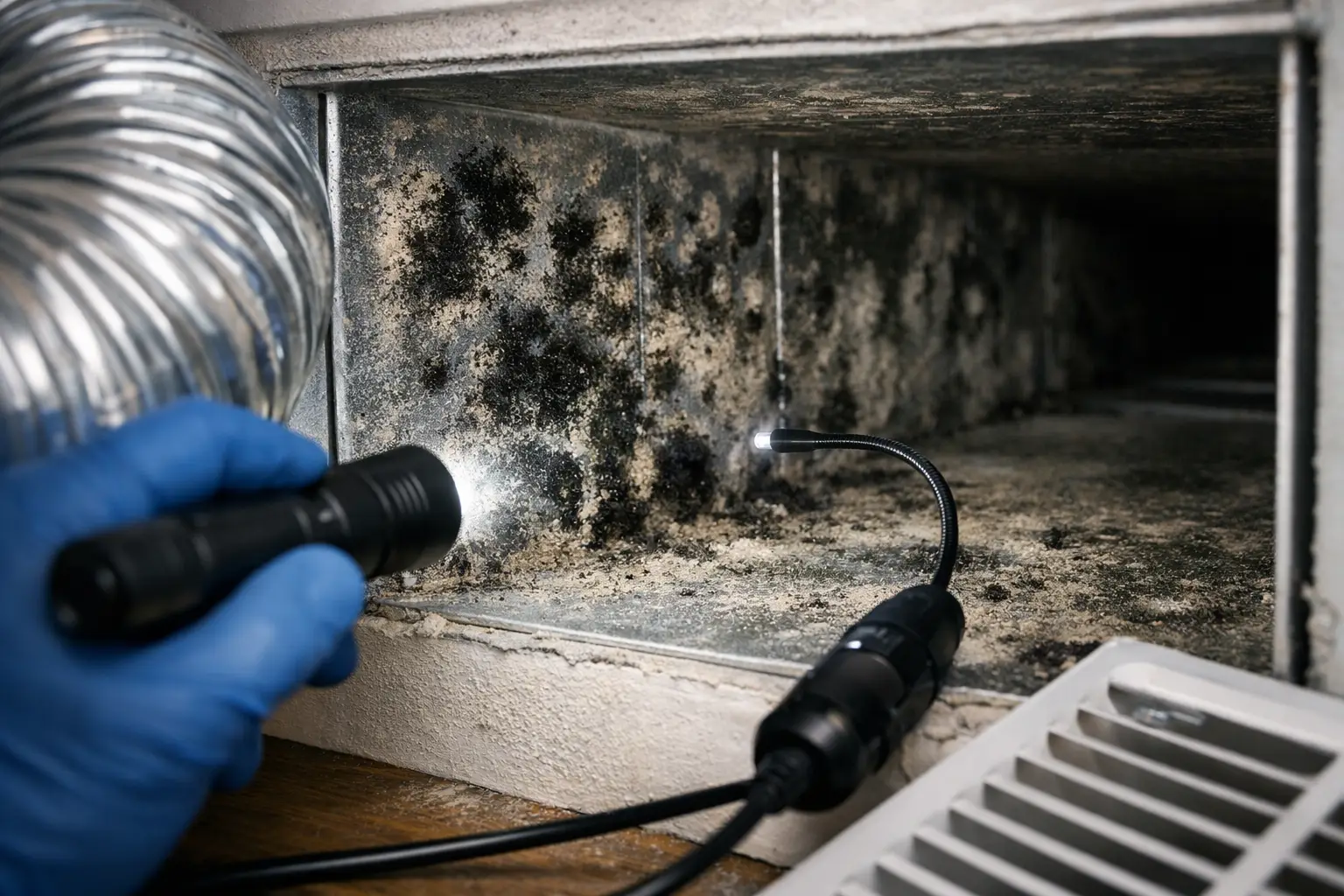
A musty AC smell that returns every time the system starts is not something to cover up with air freshener. In a coastal home or condo, black mold may be one possible concern when moisture, dust, and restricted airflow come together inside an HVAC system. The right response is not to guess from a vent cover. It is to find out what is actually inside the ductwork, where the moisture is coming from, and what needs to be cleaned or repaired.
For owners who are away from Puerto Peñasco much of the year, this can be especially frustrating. A home may look clean when you arrive, yet the first run of the air conditioning brings a stale odor, visible dust, or irritation in the air. Those signs deserve a closer look before they become a larger comfort, equipment, or property-maintenance problem.
What Black Mold Means Inside an HVAC System
Homeowners often use the term black mold for any dark spotting around vents, registers, coils, or duct openings. Dark growth does not automatically identify one specific mold species. Proper identification requires appropriate sampling and laboratory analysis. Still, any suspected microbial growth in an air-moving system should be taken seriously, especially when it appears with a persistent odor or a known moisture issue.
Mold needs moisture and a food source. Inside a residential AC system, dust, insulation fibers, organic debris, and construction residue can provide material for growth. Condensation, a clogged drain line, poor insulation, duct leaks, or humid outdoor air entering the system can provide the moisture.
The issue is not only what you see at a register. Air ducts are concealed, and the visible opening may show only a small part of the condition. A camera inspection can reveal heavy dust accumulation, disconnected ducts, water staining, deteriorated insulation, pest debris, or dark buildup farther inside the system. That visible proof matters because each condition calls for a different solution.
Why Puerto Peñasco Homes Can Be Vulnerable
Puerto Peñasco properties deal with a demanding mix of heat, humidity, wind, fine dust, and periods of vacancy. Air-conditioning systems often work hard when owners are in town, then sit unused or run at limited settings when a home is empty. Either situation can expose weak points in the system.
Coastal air can increase moisture concerns, while windblown dust can settle in returns, ducts, and registers. A remodel can add drywall dust, sawdust, insulation particles, and other debris that filters do not always capture. If a return duct is damaged or poorly sealed, it can pull contaminants from wall cavities, attics, or inaccessible areas into the airflow.
Condos add another layer of complexity. Ductwork may pass through tight spaces, shared building areas, soffits, or ceilings that are difficult to access. When the source of damage cannot be reached directly, the important step is precise identification. Clear camera findings give the owner, property manager, or repair contractor a real location to work from instead of a vague report that something might be wrong.
Signs That Call for an Inspection
A single dusty vent does not prove mold, but certain patterns should not be ignored. If you notice a recurring musty, sour, or foul odor when the AC turns on, schedule an inspection. The same is true when dark spotting appears around a vent, water stains develop near a register, or dust blows into rooms soon after cleaning.
Reduced airflow can also point to a problem. It may be caused by a dirty filter, a blocked duct, a damaged flex duct, debris left from construction, or an issue at the air handler. Weak airflow makes the system work harder, affects comfort room to room, and can contribute to condensation concerns.
Pay attention after a property purchase, renovation, water leak, pest infestation, or long vacancy. These are common times for hidden duct conditions to go unnoticed. If family members experience unusual eye, nose, or throat irritation only while staying in the home, do not try to diagnose a medical issue through the HVAC system. Speak with a qualified health professional and have the property inspected for obvious environmental conditions.
Why Surface Cleaning Is Not Enough
Wiping a dark mark off a vent cover may improve its appearance, but it does not show what is behind the grille. Spraying fragrances or chemicals into registers can also create a false sense of security while leaving the moisture source and internal contamination untouched.
Effective work starts with inspection. The system should be evaluated for contamination, debris, accessible growth, duct damage, drainage problems, and signs that outside air or attic air is being pulled into the system. Camera documentation makes the findings visible to the owner, which is particularly useful when you manage a second home from Arizona, California, Texas, or another state.
If cleaning is appropriate, the goal is removal, not simply moving material around. HEPA-filtered vacuum equipment, agitation methods suited to the duct material, and careful cleaning of registers and accessible system components help remove accumulated dust and debris. Clean It 4U Mexico uses inspection-first diagnostics and photo or video findings so property owners can see the condition before making decisions.
There are limits to cleaning. Wet, crumbling, heavily contaminated, or inaccessible duct materials may need repair or replacement instead. A duct that has collapsed, separated, or been damaged by pests cannot be restored by cleaning alone. In those cases, identifying the exact location of the problem helps a qualified repair professional open the right area and avoid unnecessary demolition.
Stop the Moisture or the Problem Can Return
Removing buildup without correcting the moisture source is a temporary fix. After suspected black mold or other microbial growth is found, the next question should always be: why did this area stay damp?
Common causes include an overflowing condensate pan, blocked drain line, sweating ductwork, an air leak around an uninsulated duct, oversized equipment that short-cycles, poor airflow, or a building leak near the system. In some homes, a dirty filter restricts airflow enough to contribute to coil icing and later water problems. In others, an unsealed return pulls humid or dusty air from places it does not belong.
A practical inspection separates what can be cleaned now from what needs mechanical attention. That distinction protects your budget. It makes little sense to pay for repeated duct cleaning if a drain problem, leaking duct connection, or damaged insulation continues feeding the same condition.
What You Can Do Before Service
Do not disturb suspected growth unnecessarily. Avoid brushing it, vacuuming it with a household vacuum, or taking apart ductwork without knowing what is behind it. Household vacuums can release fine particles back into the room, and opening damaged ducts may spread dust or expose sharp materials.
You can take clear photos of visible vent conditions, note where odors are strongest, and write down when the issue occurs. Does the smell start immediately when cooling begins? Is it limited to one bedroom? Did it appear after rain, a remodel, or months of vacancy? These details help narrow the inspection.
Check the filter if it is safely accessible and replace it when it is dirty or overdue. Use the filter type recommended for your system, because an overly restrictive filter can create airflow problems in equipment not designed for it. Also look for obvious water around the indoor unit or drain pan. If you find standing water, active leaking, electrical concerns, or a strong odor, turn the system off if it is safe to do so and arrange service promptly.
Get Proof Before You Approve the Work
No owner should have to make a costly decision based on a guess. Ask for a visual inspection of the accessible ductwork and system areas, along with a plain explanation of what was found. You should know whether the concern is ordinary dust, construction debris, pest contamination, moisture damage, suspected microbial growth, duct failure, or a combination of issues.
The best next step depends on the condition. Some systems need a thorough cleaning after remodeling or long-term dust buildup. Others need drainage correction, duct sealing, targeted odor remediation, or repair coordination before cleaning can hold up. A camera-based inspection gives you a practical starting point and documentation you can use even when you are managing the property from out of town.
A clean-looking home should also have clean air moving through it. If your AC has a recurring odor, unexplained dust, or visible dark buildup around vents, schedule an inspection while the issue is still small enough to address with a clear plan.