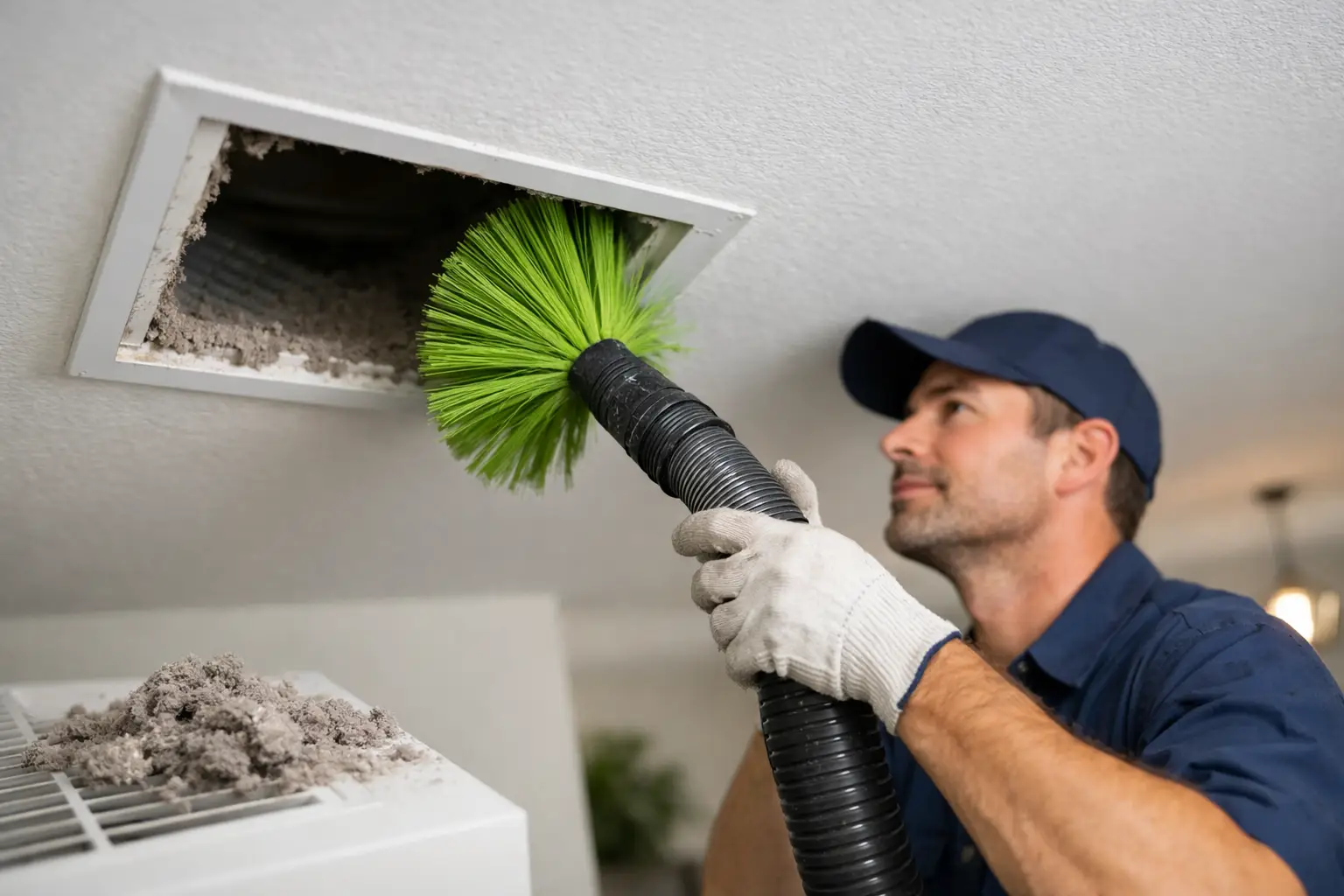
A clean-looking home can still have a dirty HVAC system. In Puerto Peñasco, windblown dust, coastal humidity, long cooling seasons, remodeling debris, and long periods when a second home sits empty can all leave contamination inside ducts where you cannot see it. The real benefits of air duct cleaning begin when the problem is identified correctly, removed thoroughly, and documented so you know what was actually inside your system.
Air ducts are not supposed to be a storage area for dust, insulation fibers, construction debris, insect remains, moisture-related growth, or foul odors. When those materials build up, each cooling cycle can move particles and smells back through the home. Cleaning is not a cure for every indoor-air or HVAC problem, but it can be a practical step when there is visible evidence of contamination, an odor source, or restricted airflow.
Benefits of Air Duct Cleaning That Matter at Home
The biggest benefit is not simply having cleaner vents. It is removing material from the hidden passages that carry conditioned air into bedrooms, living spaces, and kitchens. A proper service should focus on the duct interior, registers, return areas, and accessible components, not just a quick wipe of the vent covers.
Less dust returning to rooms
If you wipe furniture, countertops, and window sills only to see dust return quickly, your ducts may be contributing to the cycle. Dust can enter a system through return grilles, leaky duct connections, unsealed work areas during a remodel, or filters that were overdue for replacement. Once inside, it can be redistributed whenever the AC runs.
Duct cleaning will not stop all dust. Puerto Peñasco is a dusty, windy environment, and open doors, pets, traffic, and normal daily life still bring particles indoors. But removing heavy buildup from the system can reduce one ongoing source of dust, especially in homes that have been vacant for months or recently renovated.
Better control of odors
A musty smell when the AC starts is not something to ignore. Odors can come from dirty ducts, damp insulation, microbial growth, pest contamination, a dirty coil, a clogged drain issue, or a problem elsewhere in the home. That is why an inspection matters before anyone promises an odor will disappear with cleaning alone.
When contamination in accessible ductwork is the source, removal can make a major difference. A camera inspection can show whether there is dust caked inside the duct, debris caught at turns, damaged duct lining, or material that needs a contractor's repair rather than another round of cleaning. The right answer depends on the cause, not on a generic sales pitch.
A cleaner environment for sensitive occupants
People with allergies, asthma, respiratory sensitivity, or a strong reaction to moldy odors may notice indoor-air problems sooner than other occupants. Dust, dander, and other debris inside a duct system do not automatically explain every symptom, and homeowners should not treat duct cleaning as medical treatment. Still, removing known buildup and addressing moisture-related contamination is a sensible part of maintaining a cleaner home.
This is particularly relevant for vacation properties. A condo may be closed up through humid periods, then occupied by family members who expect the air to feel fresh the moment they arrive. If the system smells stale, pushes visible dust, or shows signs of contamination around registers, it deserves a closer look before the next stay.
Protection for air-conditioning equipment
Your AC equipment works hard in this climate. A restricted filter, dirty return path, clogged vents, or excessive debris in the system can add stress to a unit that already spends much of the year cooling against heat and humidity. Cleaning ducts does not replace normal HVAC maintenance, coil cleaning, drain service, or mechanical repairs. It supports them by reducing the debris moving through the air side of the system.
Good airflow also helps a technician evaluate the system more accurately. If a room stays warm, the cause could be a dirty duct, a crushed flex duct, disconnected ductwork, a closed damper, poor system sizing, or an equipment problem. Cleaning can remove the loose material, while camera inspection helps identify physical damage that cleaning cannot fix.
When Air Duct Cleaning Is Worth Scheduling
A calendar alone cannot tell you whether your ducts need service. Some homes need attention after a renovation or pest problem; others stay relatively clean with good filters and a sealed system. The most useful approach is to look for evidence.
Consider scheduling an inspection if you see dust blowing or collecting around supply registers, notice a foul or musty odor when the AC runs, find debris left after construction, or discover signs of insects or rodents. It is also wise to inspect ducts after buying a home or condo when you do not know the previous owner's maintenance history.
For owners who live in the United States and visit their Puerto Peñasco property seasonally, the period before arrival is a practical time to check the HVAC system. A home that has been closed up can hide problems until the unit starts running continuously. Photo and video documentation gives an owner a clearer basis for deciding whether cleaning, remediation, or duct repair is necessary.
Why Inspection Comes Before Cleaning
Not every duct can be cleaned in the same way. Some systems have accessible rigid ducts. Others use flexible ductwork routed through tight ceilings, soffits, or wall cavities. If a duct has collapsed, separated, or been damaged by pests, forcing equipment through it can make the problem worse.
An inspection-first process provides proof before work begins. Camera footage can reveal construction material, accumulated dust, black staining, loose insulation, tears, water damage, or inaccessible breaks. From there, the work can be targeted: clean what can be cleaned safely, treat the contamination issue appropriately, and identify what a qualified repair professional needs to access or replace.
That transparency matters. Homeowners should be able to see what was found and understand the recommended next step. A vague statement that a system is "dirty" is not enough when the work involves concealed areas of your home.
What a Thorough Cleaning Should Address
Effective duct cleaning is more than placing a vacuum hose near one register. The goal is to remove loosened debris while controlling what becomes airborne. HEPA-filtered equipment is particularly valuable because the material pulled from the duct system should be captured, not released back into the living space.
The work may include supply ducts, return ducts, grilles and registers, accessible vent interiors, and debris accumulation near key access points. Mold-focused cleaning may be appropriate when inspection findings and moisture conditions support it, but the moisture source also has to be corrected. If condensation, a leak, poor drainage, or damaged insulation remains, contamination can return.
Homeowners should also understand the limits. Cleaning cannot repair a disconnected duct behind a wall, eliminate an active roof leak, or compensate for an undersized AC system. Those conditions need specific repair work. A responsible service provider identifies the line between cleaning and repair instead of treating every issue as the same job.
Keep the System Cleaner After Service
The condition of your ducts after cleaning depends on what happens next. Use the correct filter size and replace it on the schedule recommended for your home, pets, occupancy, and operating conditions. A heavily used property may need more frequent changes than a rarely occupied condo, especially during dusty months.
Keep supply and return grilles clear of furniture and avoid blocking airflow with rugs or stored items. After remodeling, do not assume the contractor's cleanup reached the HVAC system. Fine drywall dust and construction debris can travel farther than expected if the AC ran during the project.
If you notice new odors, unusual dust, weak airflow, or signs of pests, address them early. Small problems inside ductwork can become larger comfort, cleanliness, and equipment issues when they sit unnoticed.
For a home you depend on from miles away, visible proof is better than guesswork. A camera-based inspection can show what your AC system is carrying before you decide on cleaning, remediation, or repair. Clean It 4U Mexico helps Puerto Peñasco homeowners take that next step with clear findings and practical recommendations.