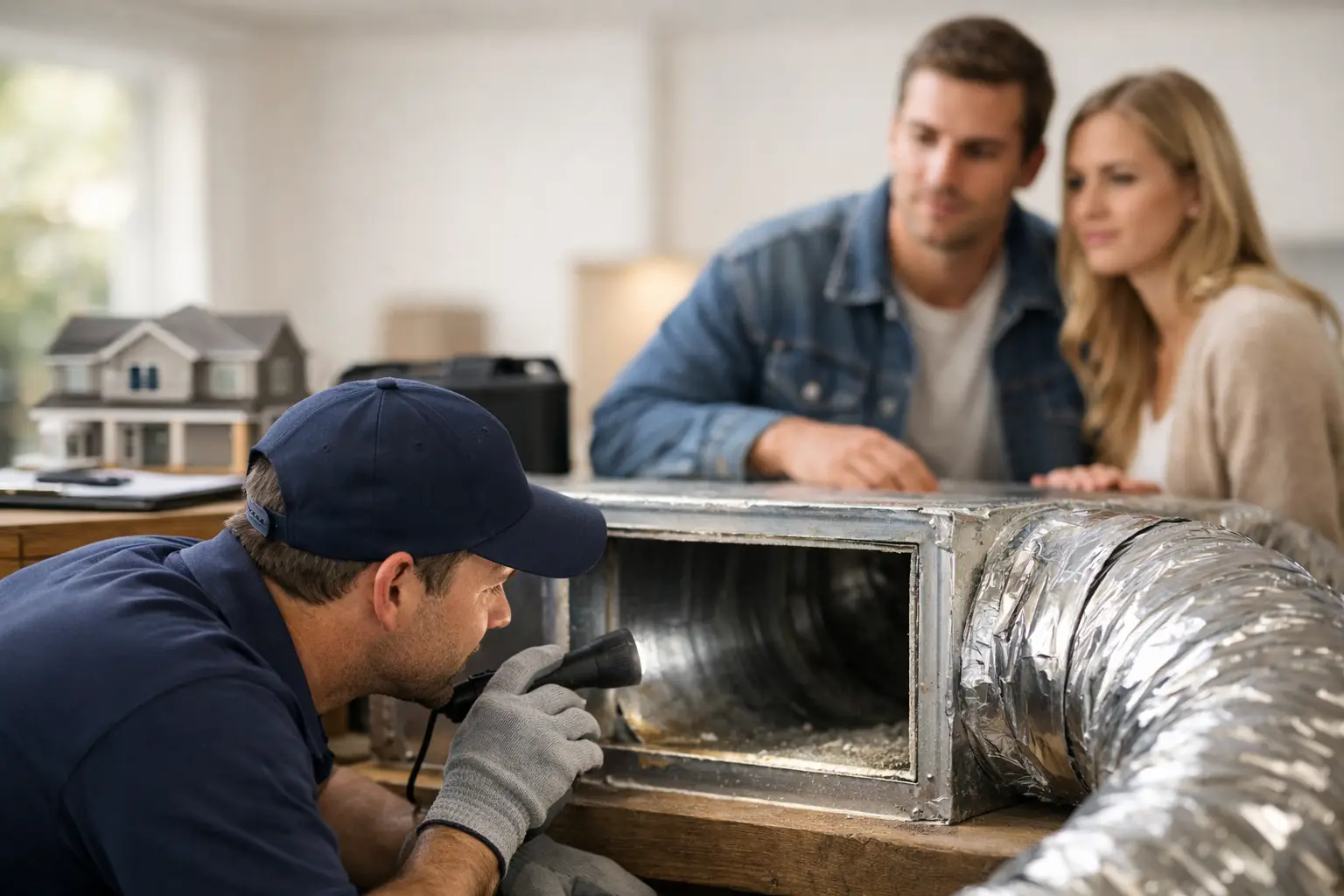
A beautiful Puerto Peñasco home can look move-in ready while its air-conditioning system is circulating construction dust, pest debris, moisture-related growth, or air from a torn duct hidden above the ceiling. A duct inspection before home purchase gives buyers a chance to see those concealed conditions before the closing papers are signed and the repair bills become theirs.
For a primary residence, vacation home, or condo that sits vacant for part of the year, the duct system deserves more than a quick look at the registers. You are buying the equipment that must keep the home comfortable through heat, wind, humidity, and dust. If the system is dirty, restricted, damaged, or contaminated, that problem can affect indoor air, cooling performance, and the life of expensive HVAC equipment.
What a Duct Inspection Before Home Purchase Can Show
A standard home inspection is valuable, but duct interiors are often inaccessible during a normal walkthrough. The inspector may identify an older air handler, poor airflow at a register, a stained ceiling, or an odor. Those clues matter, but they do not show what is actually inside the duct runs.
A camera-based duct inspection does. It can document accumulated dust, drywall powder, wood scraps, insulation, insects, rodent contamination, loose duct connections, crushed flexible duct, standing moisture, and visible mold-like growth. The goal is not to assume every dark spot is black mold or every odor has one source. The goal is to inspect, document, and identify the condition that needs attention.
This matters especially in homes that have been remodeled. Contractors can leave sawdust, drywall debris, packaging, and other material inside open ducts. The house may have fresh paint and new flooring, yet the first time the AC runs, that residue can be pushed through the living space.
The ductwork may be older than the home looks
Cosmetic upgrades are easy to see. New cabinets, tile, windows, and furniture can make an older property feel new. Ductwork, however, is usually hidden in attics, ceilings, chases, and walls. It may have been patched over the years, disconnected during previous work, or damaged by pests.
In Puerto Peñasco, a home that has sat closed up between owner visits can develop stale or musty odors that only appear when the AC starts. That does not automatically mean the ducts require full replacement. It does mean the source should be located before you accept an explanation such as, “That smell is normal.”
Problems That Can Cost More After Closing
Dirty ducts are not just a housekeeping issue. Heavy buildup can be pulled back into the system and settle on components that need clean airflow. A clogged or neglected filter makes the problem worse, but replacing a filter alone will not remove construction debris, pest material, or contamination already inside the ducts.
Damaged ductwork can also waste cooled air in spaces where no one benefits from it. A loose connection, tear, or collapsed section may reduce airflow to a bedroom or living area while forcing the system to work longer. In a hot climate, that means less comfort and more strain on the AC equipment.
Moisture is another concern. Water intrusion, condensation issues, or poor insulation can create conditions that support mold growth. If visible growth is found, the response should fit the finding. Sometimes targeted cleaning and correction of the moisture source are appropriate. In other cases, damaged insulation or duct sections may need replacement. A responsible inspection should explain what was seen, what remains uncertain, and what repair path makes sense.
Pest contamination deserves the same direct approach. Rodent droppings, nesting material, dead insects, and entry damage should not be covered up with fragrance or treated as a minor inconvenience. The affected duct area needs to be cleaned correctly, and the opening or access point needs to be addressed so the problem does not return.
Signs You Should Schedule an Inspection Before You Buy
Not every property needs the same level of duct investigation. A newer home with documented HVAC maintenance, clean filters, strong airflow, and no odor may present less concern than an older home with an unknown history. Still, several warning signs justify looking deeper.
Consider an inspection if you notice a musty, sour, smoky, or foul odor when the system runs. Visible dust blowing from registers, dark buildup around vents, uneven cooling, excessive noise, or rooms that never seem to cool properly also deserve attention. So do signs of roof leaks, ceiling stains, pest activity, recent renovation work, or an AC system that has been unused for long periods.
For condo buyers, the situation can be more complicated. Parts of the HVAC system may pass through shared building areas or be governed by association rules. An inspection can help distinguish an issue inside the unit from one that may require coordination with building management or a qualified repair contractor.
Ask for Proof, Not a Guess
When you are evaluating a home from another state, it is easy to rely on photos that show the rooms but not the systems behind them. Duct inspection findings should be visual whenever possible. Camera images or video give you a record of interior conditions and let you make decisions based on evidence rather than vague descriptions.
Ask the service professional to explain where the problem is located, whether it is reachable for cleaning, and whether a repair professional will be needed for a hidden section. Some duct damage cannot be repaired directly without opening a ceiling, wall, or chase. In that case, precise identification of the location can save time and prevent unnecessary demolition.
Be cautious with anyone who recommends a major cleaning or replacement without showing you the condition first. Duct cleaning is useful when there is real contamination, construction debris, odor-causing material, or heavy accumulation. It is not a magic cure for every indoor air concern. A good inspection separates what is proven from what still needs further evaluation.
How to Use the Findings During the Purchase
The best time to inspect is during the due-diligence period, when you still have choices. If the inspection finds a minor dust buildup, you may simply schedule cleaning after closing. If it finds damaged ducts, contamination, or a serious airflow restriction, you can request repair, negotiate an allowance, or reconsider the purchase based on the full condition of the property.
Keep the findings with your other home records. They establish a baseline for future maintenance and can help a technician understand what has already been found or corrected. If cleaning is performed, ask what was removed, what equipment was used, and whether the registers, vents, and accessible supply and return areas were included.
Clean It 4U Mexico uses camera-led inspection to show owners what is inside the system before recommending the next step. Where cleaning is needed, HEPA-filtered equipment helps remove debris rather than simply moving it around the home. When an inaccessible defect requires another trade, clear location details help the repair move forward.
Do Not Let a Clean Register End the Investigation
A register can be wiped clean in minutes. The duct behind it may tell a different story. Before buying, take the time to check the system that will move air through every room you plan to use. A documented inspection can turn an unknown hidden condition into a clear cleaning plan, repair request, or a decision to walk away with confidence.
If you are under contract on a Puerto Peñasco property and have questions about odors, dust, airflow, mold concerns, or concealed duct damage, schedule the inspection while there is still time to act on what the camera finds.